When we think aboutschool, the idea of subjects, topics to study, tests and evaluations always comes to mind. What if there was a different school? This edition of YVIRÁ focuses on playing and feeling, which are fundamental to educating.
Playing is important, even more so outdoors, a resource that is quite restrictive in the dynamics of city life. Houses without yards, insecurity to frequent squares and public spaces. Where will the child regulate attention, organize behavior and learn in relation to the environment and to others?
Playing is important, even more so outdoors, a resource that is quite restrictive in the dynamics of city life.
It is with this reflection that in the “Proof or dare” section, the “Friends of the CpE Network” Mônica Oliveira and Virgínia Chaves talk about the importance of playing outdoors in school practice, not just as a distraction or leisure activity during recess, but as part of early childhood education.
The discussion about playing outdoors reminds us that the environmental crisis also matters in learning. This edition of YVIRÁ’s interview addresses this topic, with a connection that is not intuitive at first: Professor Naercio Menezes Filho talks to Elisa Martins about the impact of the climate emergency on child development. In intrauterine life, what the mother feels can also interfere with the behavior and school learning of children.
The discussion about playing outdoors reminds us that the environmental crisis also matters in learning.
A school with more play and more feeling, different from the traditional school, already exists and is presented in the “Worth noting” section, which presents the detailed report of teacher Leila Rocha Sarmento Coelho to the CpE Network associate researcher Ana Cláudia de Souza about the School of Dreams as an educational alternative. The School of Dreams is in the municipality of Bananeiras, in Paraíba, and is not separated by grade or age: engagement is collective, based on projects built from listening, in a dynamic that involves educators and families.
The practice of listening is an important point in the process of dealing with emotions. Much is said about developing socio-emotional skills in students, but little attention is paid to how educators deal with their own emotions. The call for self-care is what Sonia Maria Guedes Gondim also offers in the section “Proof or dare”: Dealing with emotions is an essential requirement for educators, just as playing is for children, as it involves well-being, mental health and improves relationships with others and with the world.
The practice of listening is an important point in the process of dealing with emotions.
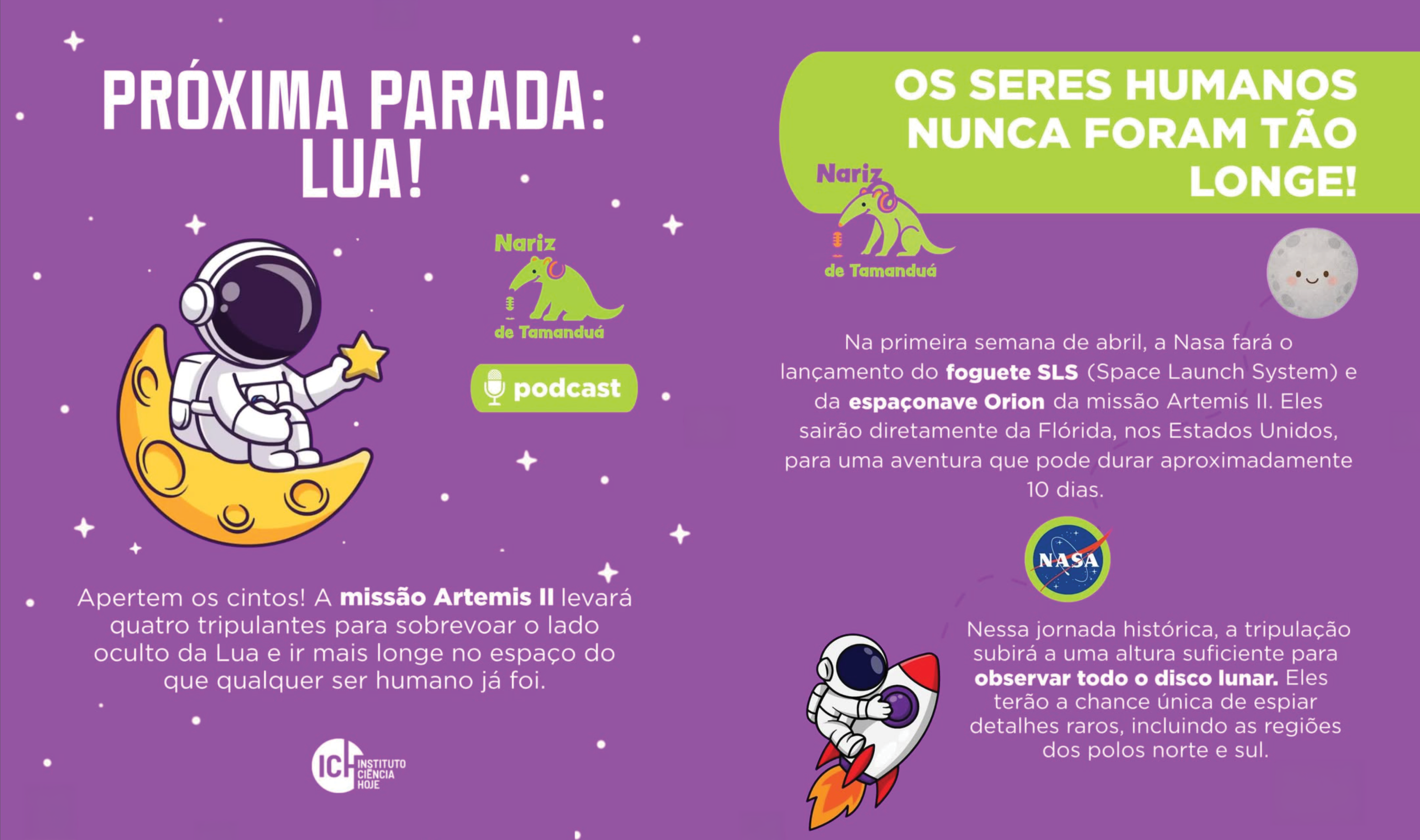
Our recommendations in this edition are also related to playing, feeling, and living. The Break section features our editor Fernando Louzada’s review of “Nariz de Tamanduá” (Anteater’s Nose), a podcast for children who sniff out science in everything, a playful resource that can be integrated into the classroom to promote learning.
Our recommendations in this edition are also related to playing, feeling, and living.
And in the Science Counts section, Janaina Weissheimer, general director of the CpE Network, explains the results of a study showing that multilingual people are half as likely to show signs of cognitive aging compared to people who speak only one language. So, to have a younger brain, learn languages!
Finally, in “What about?”, which raises questions that trouble teachers, Professor and “Friend of the CpE Network” Renata Silva Bergo questions how to build continuing education that addresses the asymmetries between what teachers want and need in the classroom. Professor Manuelita Falcão Brito answers, presenting a proposal that builds bridges, inviting us to reflect on how to build continuing teacher education, from content to methodology. This edition of YVIRÁ presents experiences and shows that yes, a different kind of school is possible.