




Luiz Roberto Liza Curi
Sociologist and PhD in Economics from Unicamp
Holder of the Paschoal Senise Graduate Studies Chair at USP
Rector of UniSENAI SP
Brazil will have no future unless we manage to revive the vocations of children and young people enrolled in basic education.
The lack of a clear commitment by the State to knowledge, education, and culture resulted in a figure of 68,036,330 people in the country who had not completed basic education as of 2024.
Conversely, there are examples of Brazilian states and municipalities that have implemented genuine state-level policies focused on learning, correcting educational trajectories regardless of students’ income or school location.
Most higher education curricula in the country—whether in public or private institutions—are content-heavy, segmented by subject, and lacking in interdisciplinarity; they struggle to bridge the gap between the classroom and professional environments, complex job requirements, or societal demands, while also failing to properly account for the nature of faculty engagement.
Millions of students graduating from public high schools never enter higher education; millions who do enter fail to graduate; and millions graduate without having truly learned the material or secured employment.


Luiz Roberto Liza Curi
Sociologist and PhD in Economics from Unicamp
Holder of the Paschoal Senise Graduate Studies Chair at USP
Rector of UniSENAI SP
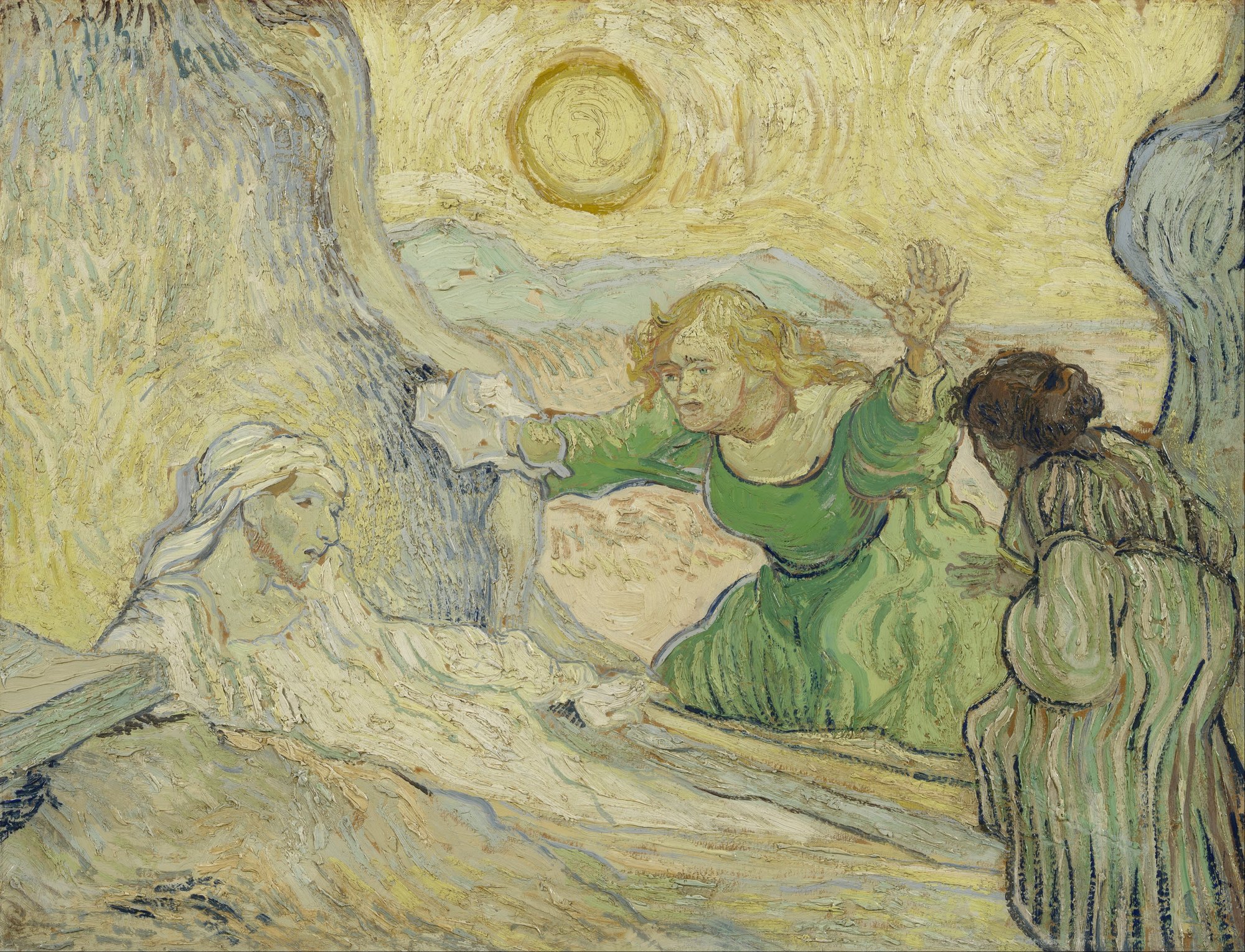
OCTOBER/NOVEMBER 2026 | n.º 9 | The country will have no future unless we manage to revive the vocations of children and young people enrolled in basic education CREDIT: VINCENT VAN GOGH – THE RAISING OF LAZARUS (AFTER REMBRANDT), PUBLIC DOMAIN, VIA WIKIMEDIA COMMONS
The quest for eternity can, in various ways, represent an abandonment of life. The Russian writer Leonid Andreyev (1871–1919) offers a literary perspective on the return of the biblical figure Lazarus, whose soul is reborn while his body continues to decompose. The American author Isaac Asimov (1920–1992) applies finite science to infinite time and space in his novel *The End of Eternity*. Meanwhile, the Argentinian writer Jorge Luis Borges (1899–1986) describes, in the short story “The Immortal,” a community of immortals who lose all sense of purpose and interest in life, eventually becoming as motionless as a rock. Eternity paralyzes time and attempts to eliminate the future. Furthermore, the Italian author and thinker Giovanni Papini (1881–1956), in his short story “The Mirror That Flees,” warned us that the loss of belief in the future ultimately destroys the present. Brazil will have no future unless we manage to revive the vocations of children and young people enrolled in basic education.
Brazil will have no future unless we manage to revive the vocations of children and young people enrolled in basic education.
In 2025, approximately 37 million enrollments were recorded in public schools, compared to about 9 million in private schools. That same year, there were 7.3 million students enrolled in high school, with 6.3 million of them in public schools. However, there are several metrics that serve as troubling indicators of the challenges faced by students in the public basic education system. Among these is the dropout rate.
More than half of those who enter the fifth grade of elementary school do not go on to complete high school —a level that itself sees a loss of over 400,000 enrollments. Approximately 74% of the students who dropped out did not want to leave.
The lack of a clear commitment by the State to knowledge, education, and culture resulted in a figure of 68,036,330 people in the country who had not completed basic education as of 2024. Of these, 4,636,176 are between the ages of 18 and 24. Compounding these figures is the fact that 29% of the population is functionally illiterate. Among high school graduates, 17% are functionally illiterate, and among those with higher education degrees, 12% fall into the same category.
The lack of a clear commitment by the State to knowledge, education, and culture resulted in a figure of 68,036,330 people in the country who had not completed basic education as of 2024.
Hidden Performance
On the other hand, the last two announced results from the Basic Education Assessment System (Saeb) —in 2024 and 2026 —showed that only 5% and 8%, respectively, of high school seniors were proficient in mathematics. This proportion signals a collapse in learning within public schools. Although the Basic Education Development Index (IDEB) released in 2026 showed improvement, this gain stems more from school systems manipulating student pass rates than from actual learning.
There is a visible lack of vigor in prioritizing learning in public schools, evident not only in the level of government commitment shown but, above all, in this “hidden performance.” Most remarkably, the national Saeb results are supplemented by assessments from local public-school systems; yet these local assessments do not seem to guide efforts toward continuous learning improvement. The impression is that these tests—while necessary and essential—are structured to serve political aims, fueling rankings rather than addressing students’ actual needs.
Conversely, there are examples of Brazilian states and municipalities that have implemented genuine state-level policies focused on learning, correcting educational trajectories regardless of students’ income or school location. Notable examples include Piauí, Ceará, Pernambuco, Paraná, São Paulo, and Joinville (Santa Catarina).
Conversely, there are examples of Brazilian states and municipalities that have implemented genuine state-level policies focused on learning, correcting educational trajectories regardless of students’ income or school location.
In these places, well-crafted diagnostic assessments have led to coordinated actions; assessment serves as a tool for monitoring progress and identifying immediate measures to address individual student learning needs. Thus, the assessment process—flexible and adaptable to both general and specific contexts—tracks and guides actions and, crucially, their impact. Unfortunately, after decades of expanding student access to public basic education, the pursuit of impact has largely focused on short-lived policies rather than on integrating young people into the economy or culture.
When we track the paths taken by high school graduates, the situation is stark. In 2024, there were 2.4 million graduates; of these, approximately 1.7 million came from public schools—a sector that sees about 27% of its graduates enroll in higher education, compared to 60% of graduates from private schools. If we view public universities as the primary drivers of impact for students immediately following high school, we find that the presence of these students is due to quota legislation combined with the specific access policies of established universities such as USP, Unicamp, UFRJ, and others.
Content-heavy and inadequate curricula
These isolated initiatives are far from sufficient. A large portion of university admissions—even with affirmative action quotas—occurs through the Unified Selection System (Sisu) rather than through access pathways where universities, especially public ones, could play a leading role in coordinating with secondary education. In this context, teacher training programs are the ones most accessible under the selective admission criteria based on the National High School Exam (Enem) scores, where a score of 400 points is sufficient for entry into these courses. Another crucial aspect lies in the very way public university undergraduate programs are organized; beyond the specific selection process used, they often disregard the socio-educational backgrounds of enrolled students.
The primary reason for the lack of relevance regarding graduates from the public sector lies in the organization of the curricula themselves—which, if not simply poor, are elitist. It is not difficult to understand why. Most higher education curricula in the country—whether in public or private institutions—are content-heavy, segmented by subject, and lacking in interdisciplinarity; they struggle to bridge the gap between the classroom and professional environments, complex job requirements, or societal demands, while also failing to properly account for the nature of faculty engagement.
Most higher education curricula in the country—whether in public or private institutions—are content-heavy, segmented by subject, and lacking in interdisciplinarity; they struggle to bridge the gap between the classroom and professional environments, complex job requirements, or societal demands, while also failing to properly account for the nature of faculty engagement.
These curricula avoid contextualizing content in terms of developing competencies and skills, as doing so would require moving beyond traditional—and often useless—lectures to foster greater contact with professional environments, whether in science and teaching, industry, or public services. Most curricular structures date back to the 1970s, as if it were possible for graduates to have a past lying ahead of them. Under these circumstances, students with poor academic foundations resulting from a deficient high school education find no support system—nor even the encouragement to link core subjects to professional contexts, a practice employed for decades by OECD countries. The result is extremely high dropout rates. In public universities, student attrition reached 54% in 2024, while in private universities, it hit 63%. Dropout rates in teacher training and engineering programs reach as high as 70%.
Beyond the reality of higher education — or perhaps driven by it — the IDados Institute identified 5.4 million unemployed university graduates in 2023. That same year, the newspaper O GLOBO published a report indicating that only 14% of graduates were working in their field of study; in healthcare fields, that figure drops to 12%.
Millions of students graduating from public high schools never enter higher education; millions who do enter fail to graduate; and millions graduate without having truly learned the material or secured employment.
Millions of students graduating from public high schools never enter higher education; millions who do enter fail to graduate; and millions graduate without having truly learned the material or secured employment.
The lives of these millions of Brazilians appear disconnected from prospects for their own development and that of the country; instead, they have been indelibly bound to a deep inequality that—unlike the abstract literary musings on eternity—will ultimately leave a legacy of mortality extending far beyond their own lifetimes.