Fernando Louzada Neuroscientist and Full Professor at the Federal University of Paraná Deputy Coordinator of the CpE Network and Member of the YVIRÁ Editorial Committee
Empirical evidence indicated significant learning losses, particularly in mathematics, as well as a decline in the percentage of students achieving adequate performance levels across different stages of schooling.
These changes were accompanied by a reduction in so-called “social jetlag,” indicating better alignment between biological rhythms and sleep schedules.
Early evidence suggests that more flexible school schedule models are feasible and can yield benefits, although further research into their impact is still needed.
Fernando Louzada Neuroscientist and Full Professor at the Federal University of Paraná Deputy Coordinator of the CpE Network and Member of the YVIRÁ Editorial Committee
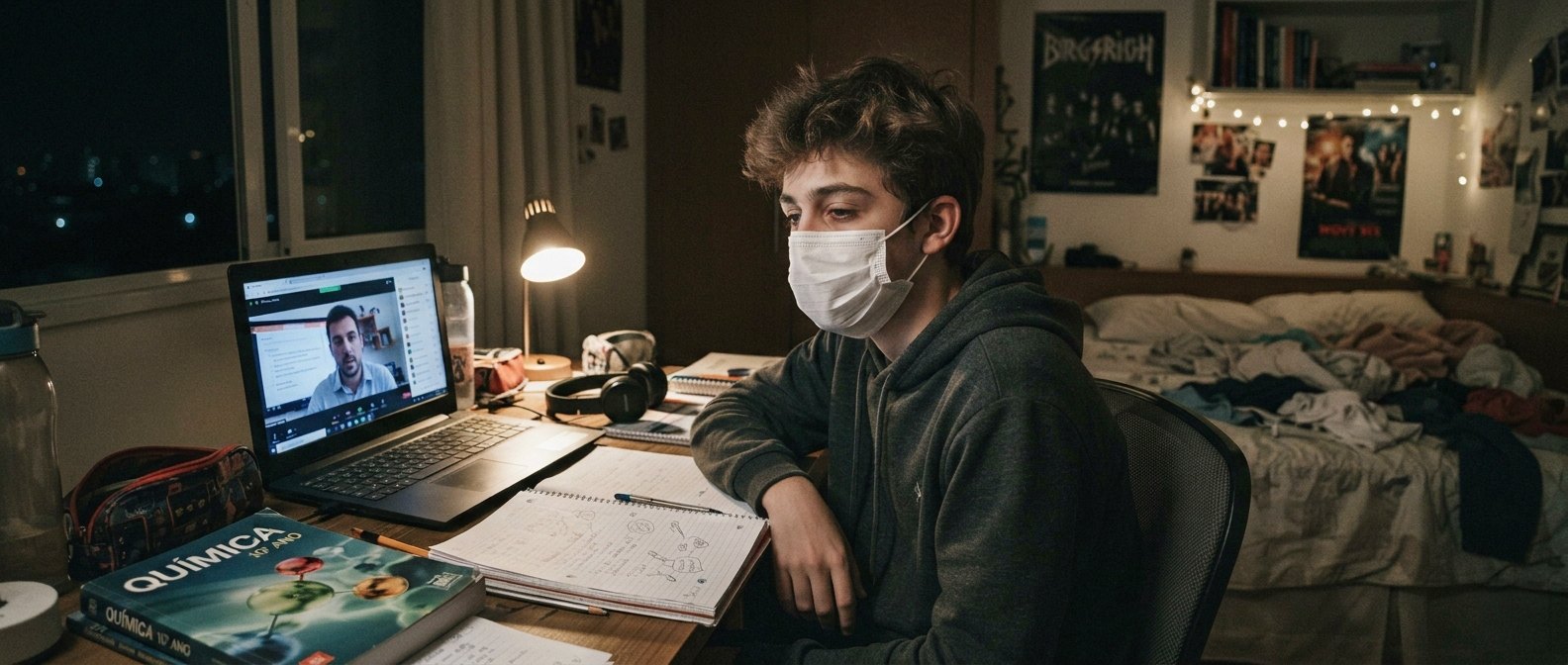
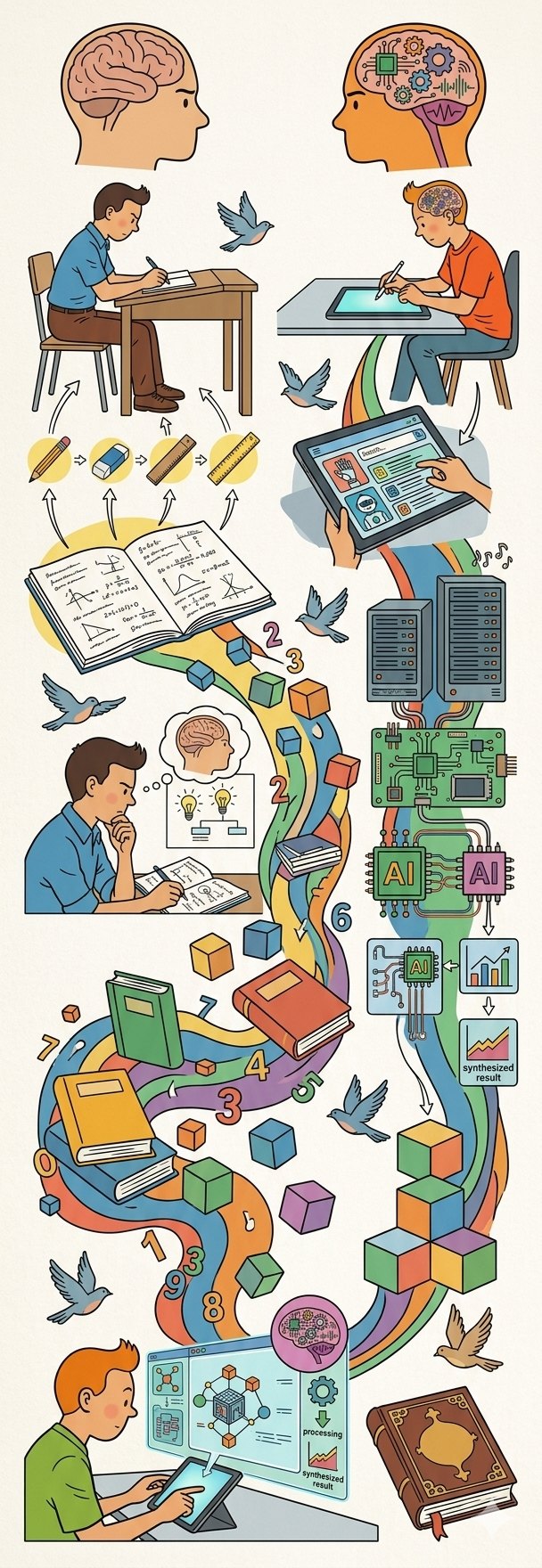
OCTOBER/NOVEMBER 2026 | n.º 9 | With the return to in-person activities, the positive impact of flexible scheduling was overlooked, especially in the school context CREDIT: ILLUSTRATION: C. FLEURY WITH GEMINI
During the COVID-19 pandemic, daily life became defined by loss, fear, anxiety, and uncertainty, while significant ethical dilemmas emerged—particularly regarding the allocation of scarce resources and restrictions on mobility and social interaction. This context yielded important lessons across various fields, including health, education, and social organization. In the realm of education, the pandemic caused an unprecedented disruption, affecting approximately 1.6 billion students worldwide and leading to prolonged school closures in many countries.
The consequences of emergency remote teaching were far-reaching and unequal. Teachers reported difficulties in maintaining the pace of learning and covering the planned curriculum, while students — especially those from lower socioeconomic backgrounds — faced additional obstacles, such as a lack of access to digital resources and suitable study environments.
These inequalities exacerbated pre-existing structural problems, with more severe impacts on vulnerable groups, including students facing food insecurity and those with disabilities. Empirical evidence indicated significant learning losses, particularly in mathematics, as well as a decline in the percentage of students achieving adequate performance levels across different stages of schooling.
Empirical evidence indicated significant learning losses, particularly in mathematics, as well as a decline in the percentage of students achieving adequate performance levels across different stages of schooling.
Beyond academic setbacks, there were significant impacts on emotional well-being. An increase in anxiety symptoms among students and a heavier workload for teachers were widely observed. Teachers had to rapidly adapt their pedagogical practices — often through self-directed learning — which also contributed to the accelerated development of digital competencies.
In this process, terms such as remote teaching, synchronous and asynchronous classes, and hybrid learning became part of everyday educational life. The pandemic, therefore, acted as a catalyst for the incorporation of digital technologies, highlighting both their potential and the need for continuing education policies.
Alignment of biological rhythms and sleep
At the same time, the pandemic had a broad impact on health, including significant changes in sleep patterns. Studies indicated a decline in sleep quality, more frequent nighttime awakenings, and longer time to fall asleep — issues often linked to rising mental health problems. However, changes suggesting potentially positive effects were also observed: sleep duration increased, bedtimes and wake times shifted later, and daytime napping became more frequent. Among adolescents, for instance, there was a significant increase in the proportion of those getting the recommended amount of sleep.
These changes were accompanied by a reduction in so-called “social jetlag,” indicating better alignment between biological rhythms and sleep schedules. The flexibility imposed by lockdowns allowed many individuals to adjust their schedules to meet their biological needs, highlighting the influence of rigid social structures on time management. Changes in other rhythmic behaviors, such as meal times, were also observed, reinforcing the idea that the circadian system is highly sensitive to shifts in the social context.
These changes were accompanied by a reduction in so-called “social jetlag,” indicating better alignment between biological rhythms and sleep schedules.
As in-person activities resumed, many of these changes were gradually reversed, with a return to stricter schedules and shorter sleep durations. Yet, this return also brought to light an important lesson that had largely been overlooked: the positive impact of flexible scheduling, particularly in schools. Despite the evidence, school schedules reverted to rigid structures after the pandemic—often incompatible with the sleep needs of students, especially adolescents.
More flexible school schedules
The pandemic highlighted that there is no single ideal schedule that suits everyone, given individual variations in biological rhythms. Consequently, proposals to make school schedules more flexible are gaining importance. This does not imply eliminating in-person instruction—which remains fundamental to social development—but rather integrating more flexible models that combine in-person and remote activities. One possible approach involves maintaining a core in-person component complemented by activities in virtual environments, allowing for greater adaptability regarding learning times and spaces.
Another key aspect concerns the regularity of sleep schedules, which has been shown to be just as important—if not more so—for health than total sleep duration. In this context, flexibility does not mean a lack of structure; rather, it entails creating conditions that enable students to maintain routines that are more consistent and aligned with their biological rhythms.
Early evidence suggests that more flexible school schedule models are feasible and can yield benefits, although further research into their impact is still needed.
Early evidence suggests that more flexible school schedule models are feasible and can yield benefits, although further research into their impact is still needed.
In summary, the pandemic revealed significant weaknesses but also created opportunities to rethink how educational systems are organized. Ignoring the lessons learned during this period—particularly those regarding the relationship between sleep, health, and learning—would mean missing a valuable opportunity to drive evidence-based change. Building an educational system that is more inclusive, flexible, and responsive to student needs depends on incorporating these lessons, without abandoning in-person interaction but rather seeking to make it more effective and healthy.