




Lavínia Teixeira-Machado
Associate Professor, Department of Dance and Graduate Programs in Health Sciences (PPGCAS) and Psychology (PPGPSI), Federal University of Sergipe (UFS)
Leader of the Art, Culture, Education, and Health Laboratory (LACES-UFS) research group
Researcher with the Study and Research Group on Psychology, Education, Health, and Inclusion (UFS) and the Neuroplasticity and Exercise Study and Research Group (UNIFESP)
The debate is complex and delicate. It is not a matter of denying the clinical importance of diagnoses. For many people, especially those with autism, ADHD, intellectual disabilities, dyslexia, or other conditions—a diagnosis can represent relief, a sense of belonging, and access to rights that have historically been denied.
However, there are also contexts where the diagnosis turns into a label, a verdict, or a justification for lowered expectations. The student is no longer seen as a unique individual but is instead interpreted solely through a diagnostic lens.
A truly inclusive education requires us, as educators, to become aware of the need to transform practices still defined by the banking model into pedagogical processes that foster mutual engagement.
The contemporary obsession with diagnosis runs the risk of turning pedagogical, social, and emotional issues into clinical categories. And who does this serve?


Lavínia Teixeira-Machado
Associate Professor, Department of Dance and Graduate Programs in Health Sciences (PPGCAS) and Psychology (PPGPSI), Federal University of Sergipe (UFS)
Leader of the Art, Culture, Education, and Health Laboratory (LACES-UFS) research group
Researcher with the Study and Research Group on Psychology, Education, Health, and Inclusion (UFS) and the Neuroplasticity and Exercise Study and Research Group (UNIFESP)
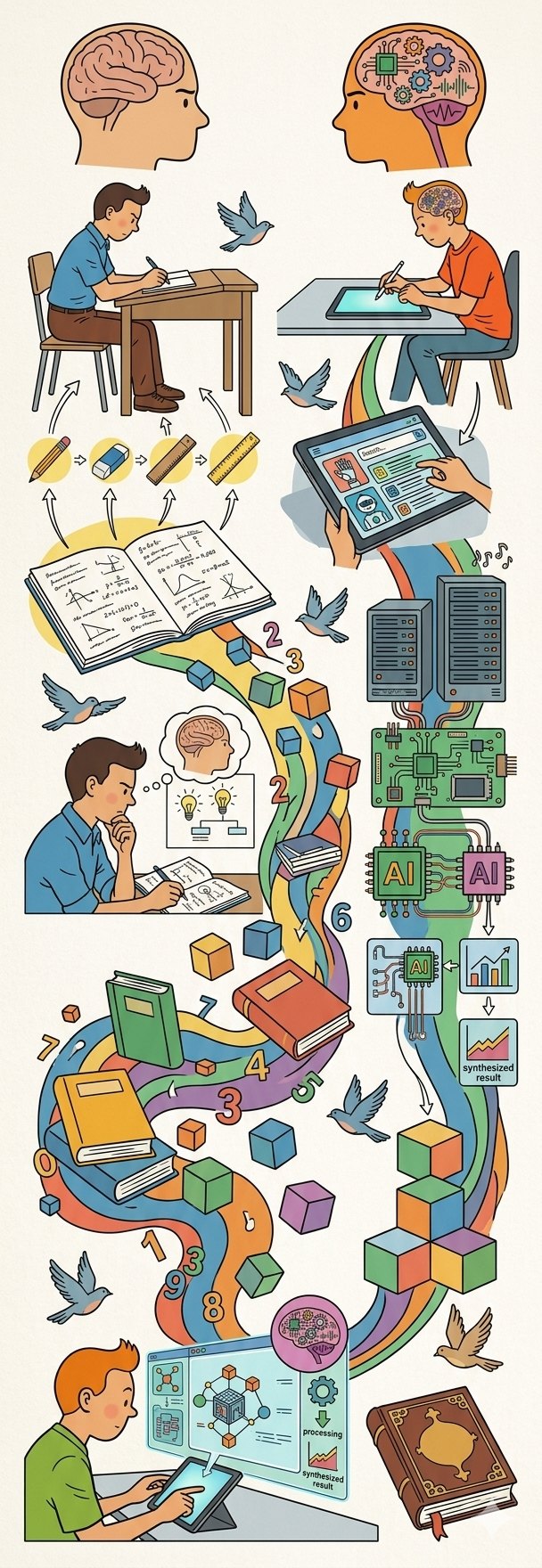
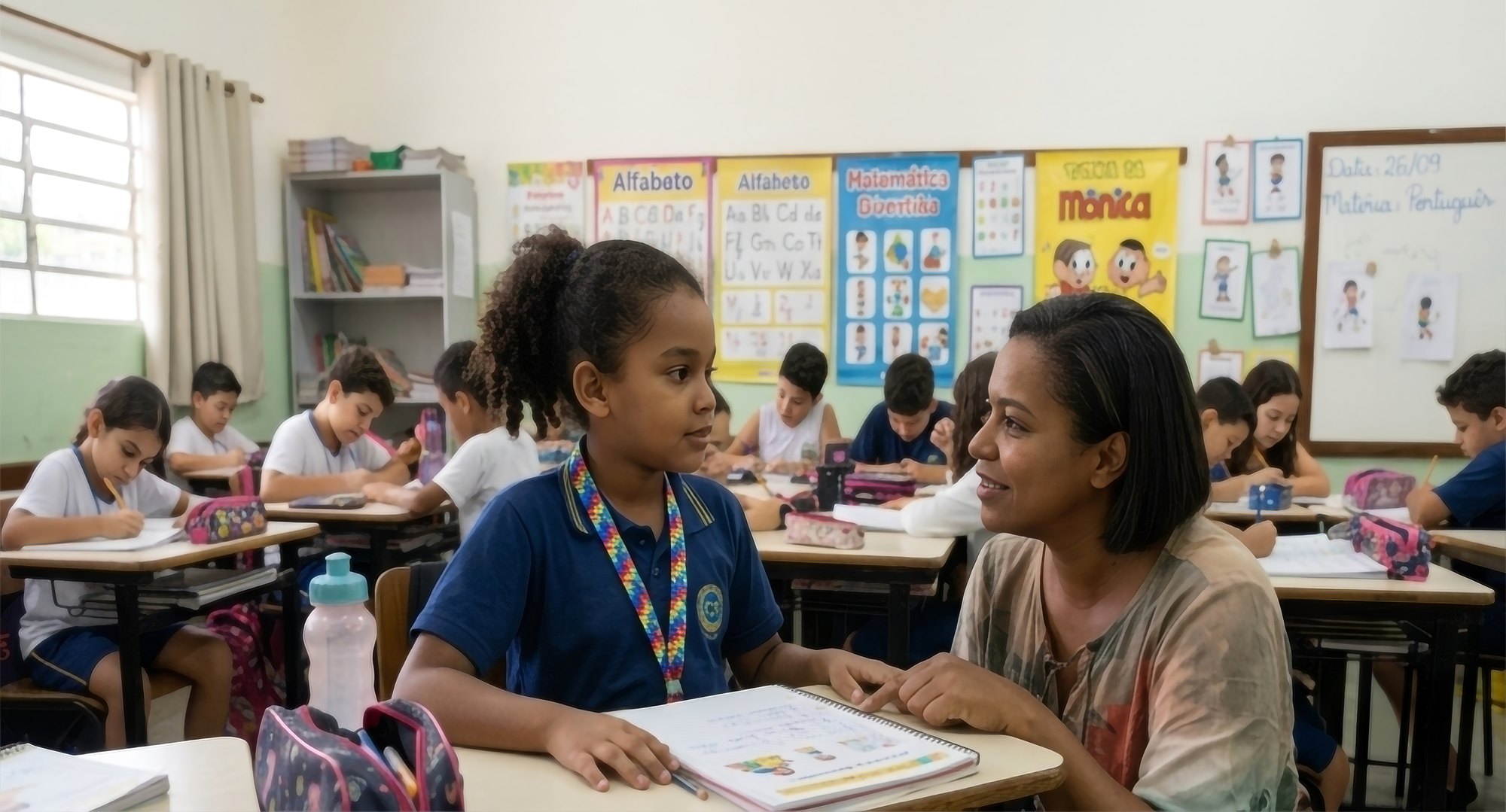
OCTOBER/NOVEMBER 2026 | n.º 9 | Reliance on medical diagnoses can shift a responsibility that is also pedagogical, ethical, and political CREDIT: ILLUSTRATION C. FLEURY WITH GEMINI
A paradox is unfolding in Brazilian schools: never has there been so much talk about accessibility, inclusion, neurodiversity, and specialized support. Yet, the need for a diagnosis to guarantee the right to learn has never been greater. Clinical diagnosis has become a sort of “pedagogical passport.” Students without a diagnosis remain unsupported and invisible, while students with a diagnosis are often reduced to their diagnostic condition. It is inevitable, then, to ask: do medical reports facilitate access to educational support, or are they being used as an institutional excuse to justify pedagogical failures?
The debate is complex and delicate. It is not a matter of denying the clinical importance of diagnoses. For many people, especially those with autism, ADHD, intellectual disabilities, dyslexia, or other conditions—a diagnosis can represent relief, a sense of belonging, and access to rights that have historically been denied. The complication arises when the school offloads a responsibility—which is pedagogical, ethical, and political—onto a medical report.
The debate is complex and delicate. It is not a matter of denying the clinical importance of diagnoses. For many people, especially those with autism, ADHD, intellectual disabilities, dyslexia, or other conditions—a diagnosis can represent relief, a sense of belonging, and access to rights that have historically been denied.
As early as 2008, the National Policy on Special Education from the Perspective of Inclusive Education (PNEEPEI) advocated a revolutionary approach: teachers need not wait for a medical diagnosis to recognize barriers within the teaching-learning-assessment process and initiate strategies to guarantee the constitutional right to education. PNEEPEI shifted the focus away from the disability itself and toward the concrete conditions of school participation.
Yet, more than fifteen years later, many schools continue to operate under a “medicalizing” logic. A common refrain is: “Without a medical report, there is nothing we can do.” What lies beneath this statement? The notion that only medicine can authorize pedagogical care?
Teachers observe distress, difficulty, exhaustion, isolation, sensory overload, or communication barriers, yet they wait for an external document to legitimize interventions that ought to stem from their own educational practice.
This reliance on diagnosis reveals a dangerous shifting of institutional responsibility. Disability comes to be located exclusively within the individual, rather than in rigid school structures, inflexible methodologies, standardized assessments, or a lack of pedagogical accessibility.
The social model of disability
This is where the social model of disability—discussed by Tom Shakespeare, a British professor of disability research at the London School of Hygiene and Tropical Medicine—becomes fundamental. Shakespeare criticizes both the reductionist biomedical view and simplistic interpretations of disability. For him, bodily impairments exist, but disability arises primarily from the interaction between these impairments and social barriers. The central question shifts from “What is wrong with this student?” to “What barriers is the school creating?”
When an autistic child struggles in an extremely noisy classroom, the problem is not merely sensory; it is environmental. When a student with dyslexia fails on assessments that are exclusively written and timed, the problem is not merely cognitive; it is methodological. When a student with ADHD is repeatedly punished for being unable to sit still for hours, the difficulty may lie less in their attention span and more in a school model that demands silent, obedient bodies.
In this sense, a formal diagnosis can both guarantee rights and cement stigmas. Some schools use diagnoses to secure support services, curricular adjustments, assistive technologies, and inclusive pedagogical strategies. In such cases, the document acts as an instrument of social protection. However, there are also contexts where the diagnosis turns into a label, a verdict, or a justification for lowered expectations. The student is no longer seen as a unique individual but is instead interpreted solely through a diagnostic lens.
However, there are also contexts where the diagnosis turns into a label, a verdict, or a justification for lowered expectations. The student is no longer seen as a unique individual but is instead interpreted solely through a diagnostic lens.
It is at this point that an uncomfortable question arises: whose disability is it, really?
Perhaps disability lies not only within the student but also in the institution’s inability to embrace human diversity in its many ways of existing, feeling, communicating, and learning. Ableism operates precisely by naturalizing an ideal of normality that shapes curricula, assessments, teaching practices, and school relationships. However, confronting ableism requires more than just technical adaptations; it demands a paradigm shift. The Brazilian educator and philosopher Paulo Freire (1921–1997) famously criticized the “banking model” of education, which is based on the top-down transmission of knowledge. In this model, differences tend to be interpreted as deficits, inadequacies, or individual failures.
Teaching is not about exercising control
Inspired by Freire, the American writer, educator, and activist Bell Hooks (1952–2021) proposed a liberating educational practice grounded in mutual engagement between teachers and students. For Hooks, teaching is not about exerting control over others, but about collectively constructing transformative experiences. This entails recognizing that learning is relational, embodied, affective, and shaped by our social experiences.
A truly inclusive education requires us, as educators, to become aware of the need to transform practices still defined by the banking model into pedagogical processes that foster mutual engagement. Teachers and students do not occupy neutral or detached positions; both create the educational space. Both learn, influence, and are influenced.
A truly inclusive education requires us, as educators, to become aware of the need to transform practices still defined by the banking model into pedagogical processes that foster mutual engagement.
This paradigm shift requires abandoning the logic of homogeneity. It requires understanding that accessibility is neither a privilege nor a concession, but an ethical prerequisite for participation.
In this regard, the challenge posed by the Brazilian educator, psychoanalyst, and theologian Rubem Alves (1933–2014) concerning “teaching disorder” remains deeply relevant. His perspective shifts the focus away from pathologizing students and toward a critical reflection on the teaching-learning-assessment processes themselves.
Furthermore, not every learning difficulty is a disorder. Sometimes, it is fatigue. Sometimes, it is social suffering. Sometimes, it is hunger, violence, anxiety, or exclusion. Sometimes, it is simply a matter of incompatibility between a rigid pedagogical approach and human diversity.
The contemporary obsession with diagnosis runs the risk of turning pedagogical, social, and emotional issues into clinical categories. And who does this serve? Most often, it serves educational systems that prefer to medicalize academic failure rather than re-examine their own structures.
The contemporary obsession with diagnosis runs the risk of turning pedagogical, social, and emotional issues into clinical categories. And who does this serve?
Advocating for inclusion does not mean denying diagnoses. It means refusing to accept them as the only possible path to care. It means understanding that pedagogical support should not depend solely on formal diagnoses, but also on the ethical and professional insight of teachers committed to the right to learn.
The central issue, therefore, may not be whether formal diagnoses help or hinder. The real question is: what does the school do before, during, and after the diagnosis?
Because a school committed to inclusion does not wait for a document to recognize humanity, dignity, and the right to full participation.