






Elisa Martins
Journalist, special for Yvirá


Elisa Martins
Journalist, special for Yvirá
APRIL/MAY 2026 | nº.6 | As part of a pioneering initiative in schools in Piauí Brazilian state, professor and researcher Rosa Vicari defends teacher training with a broad understanding of the benefits and limitations of using AI in classrooms
PHOTO: PERSONAL ARCHIVE
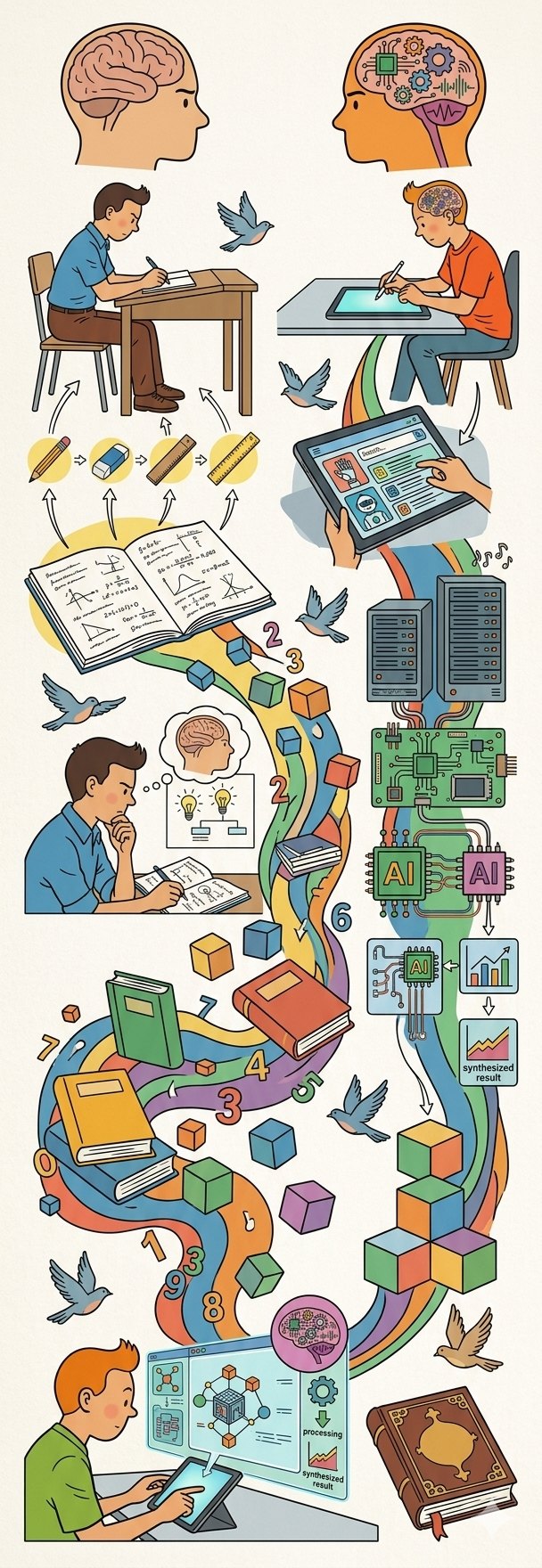
Artificial intelligence is transforming the teaching-learning process worldwide. The speed at which this is happening is so great that it challenges schools, teachers, and students. Abroad, initiatives are advancing to replace teachers with AI tutors. This is not a widespread scenario in Brazil, but the advancement of technology demands increasingly refined training from teachers. Researchers like Rosa Vicari, professor at the Institute of Informatics of the Federal University of Rio Grande do Sul (UFRGS) and specialist in intelligent teaching-learning systems and artificial intelligence, are working in this field of study.
She works on a pioneering project that seeks to train teachers to include AI subjects to more than 12,000 students in state public schools ofPiauí, in the northeastern region of Brazil, and which has the seal of the UN agency for education (UNESCO). In recent years, the initiative has expanded and reached other cities and private institutions. In an interview with YVIRÁ, Rosa Vicari shares the mistakes, successes, and challenges of implementing AI in education. Addressing the topic is a necessary and irreversible path, but one that requires caution and awareness. Check it out below.
 How is artificial intelligence transforming the teaching-learning process?
ROSA VICARI: Since 2022, I have been following an experiment in the United States with Alpha School, a school that replaced traditional teachers with AI systems in some activities. Students receive content in science, mathematics, languages, etc., from AI tutors for two and a half hours a day. Some students work online from home, or on computers at school, and during the rest of the school time they develop other skills with human tutors. From what I’ve seen in parent’s groups, they seem satisfied. They even highlight the possibility of personalizing the study to the type of student. The AI system can focus on each student’s point of difficulty and work on it in a targeted way. There are other experiments in the United Kingdom that evaluate the equity of access to AI and education through large language models, such as ChatGPT. The researchers conducted some specific tests for mathematics, also without human tutors. These then curated the answers that the AI gave to high school students. The goal was this: if the AI reached at least 64% similarity with the answers teachers would give students, its large-scale use would be possible. The result was that the tested AI exceeded 64% similarity with the guidance teachers would give a student when faced with a math error. Furthermore, students who worked individually with the AI were able to solve new math problems better in future situations. These are two important international examples. In Brazil, AI has also spread rapidly. But here, it entered education strongly through large language models, such as ChatGPT, DeepSeek, Claude, etc., which in principle were not designed for this area. But the experiences have been expanding, including a pioneering project that we started three years ago in Piauí.
What is this project about?
What is your assessment of the main achivements and failures of this project?
RV: A large part of the teachers we worked with already had preconceived ideas about what AI was. For some, it was robotics. Yes, there can be intelligent robotics, but AI is not just that. Others talked about the importance of addressing AI from an ethical point of view, but forgetting that ethics are not in AI, they are in the human who develops and uses it. It is not simple to separate these preconceptions from how AI operates. A positive aspect was seeing them adapting the teachings they received in the training to the regional context in which they live. Based on their understanding of a certain idea, they adapted it to the place where they were and shared lesson plans, suggestions for image recognition software, and other tools. The teachers got involved in the process, and that was a success. One of the lessons we learned was that it is no use providing training based only on content or application method without accompanying the teachers in their application with the students. We then began to monitor them more closely, asking them to submit lesson plans, share explanatory videos with each other, and discuss them in groups. When we opened these possibilities, the group went beyond what we expected. But, of course, always with our guidance, pointing out the benefits and risks of technology. After all, AI has changed not only the teaching-learning process but also media literacy itself, which is also turning to the use of AI today. All this demands care and adaptation. Its use must be conscious and critical, so that we don’t outsource our reasoning. At the same time, it’s no use telling my Logic students at the university not to use AI. They will use it, they already do. But I can say: “Solve it with AI, and then we’ll discuss the solution here, see what AI used to solve the problem, etc.” Teachers need to have this awareness because, if they don’t, they will be out of touch with the students’ world.
How should today’s teachers be trained on AI for classroom use?
RV: First, it’s necessary to understand the limits and advantages of this technology. AI isn’t creative; it’s predictive, generating something based on what it has already seen. Nor does it have empathy. It works well in one-on-one scenarios, but it’s not suitable for cooperative work that isn’t cooperation between AI and humans. Teachers must also understand the need to be careful with student data and their own data. Having this awareness is important, including the need to use AI purposefully, because it consumes resources: electricity, water, minerals. It needs to be used sparingly. Gradually, teacher training in Brazil is incorporating this debate. I know there are similar initiatives underway in São Paulo, Paraná, and Espírito Santo. Teachers are seeking this training. Especially because, starting this year, computer science education becomes mandatory, and computer science, media literacy, and AI go hand in hand. At the same time, the government is seeking to establish AI governance to guide schools and teachers in this use, which is still very new and doesn’t only have good or bad sides. It brings both.
At what level of maturity are we in relation to this expansion of AI in education?
RV: It’s not simple to measure this in Brazil, nor internationally. Several factors influence it, such as connectivity, the amount of equipment, how the content is taught in schools, whether it’s integrated across all subjects, and whether there’s a specific subject dedicated to it. And can teachers use AI with a minimum of knowledge, or not? Abroad, research is being conducted to establish the level of maturity of teachers in the use of AI. An OECD study indicates that the Latin American country with the greatest progress in this regard is Colombia. Then comes Uruguay, followed by Brazil, Argentina, and Mexico. This ranking is established through questionnaires completed by teachers about how they understand, view, and use AI. But we still lack complete information about schools, teachers, and students regarding AI literacy. Those who are in the daily operations of schools, from elementary to high school, are not necessarily teachers with a background in computer science or close to the STEM fields. They come from diverse areas. And they need not only to be trained in the subject of AI, but also to know how to apply it in their area, in their discipline. It’s not a simple process.
How has this model been in Brazil? Will AI completely reconfigure the role of the teacher or is it likely to be a complement to the teacher?
RV: Brazil has opted for the model where teachers coordinate the use of AI in schools. The training of these professionals, then, becomes even more important and relevant. And the use that will be made will depend on the maturity for the use of technologies of each teacher and each school. I am in favor of this Brazilian model. I believe that education has a connection with the affective. I don’t agree with removing the human component, as with the more radical examples from abroad that I mentioned. But it is also true that the context demands changes in the skills and competencies of teachers. Let’s say, for example, that an AI system knows geography, and the student uses this system a lot to learn geography. This will require the teacher not only to be a geography specialist, but to have other skills and abilities beyond what is already in the machine. Students will tend to seek what is fastest, most accessible, and simplest. Teachers need to adapt the way they teach as this technology changes.
Based on this scenario, is education prepared to deal with students who use AI to write papers and solve problems?
RV: The evolution of AI has been rapid, as has its impact, and this poses a significant challenge. I remember when we faced the COVID-19 pandemic, and everything was shut down. I quickly put my students online, and in the same week we resumed classes remotely. But the whole university took a semester until all professors could work in this way. It required extensive adaptation. I revised the project for the semester, changed my teaching methods, started writing more to reinforce what I was saying and to answer students’ questions. I added more examples and texts, since I couldn’t be with them during practical activities. I felt more empowered because distance learning was something I had been doing for many years, along with in-person classes. AI, on the other hand, arrived much faster. And the big debate is that, instead of prohibiting and banning these tools, we should look for ways to incorporate them pedagogically. Prohibiting doesn’t rhyme with educating. But of course, rules are necessary. I agree with using cell phones in the classroom only for educational activities; otherwise, the kids would be on their devices all the time. That’s integration and ordering. The same goes for AI. There’s no way to prohibit it; you must deal with it, which doesn’t mean being naive. You need to know its limits and potential. In addition, equity of access is also necessary. Those who have internet access anywhere, those who can afford an AI system instead of just using free AI, are in a more privileged situation. We need equity of access to information about the precautions that should be taken and the advantages that can be gained from technology.
How can this lack of access and ignorance of technology deepen inequalities in the teaching-learning process?
RV: Here, differences in infrastructure and quality of teaching in schools come into play, in addition to the lack of public policies, all together. But there is another factor in this deepening of the imbalance, which are the AI algorithms themselves. Artificial intelligence has been trained and has learned to behave in a certain way. And for it to “unlearn” is difficult, since it’s not simple to locate the batches of information that led it to learn in a certain way, or what connections were made within the algorithms that linked the data to arrive at a classification. For example, in the case of an AI that can infer a student’s cognitive state and map their difficulties and deficiencies, if this classification is not periodically reviewed and coordinated by humans, the AI will keep that student in the same profile, even if he/she improves. Someone needs to change the prompt or say that every so often the student will have to take a test to see his/her performance. If positive, his/her profile should be changed. It’s more profound than just making the resource available. It needs to be made available with quality and security.
In your view, what is the main opportunity that AI opens to improve education, and what is the biggest risk?
RV: The biggest opportunity comes from awakening reflection among the students themselves. Once, in class, students began to mention professions they would like to pursue and to question which of them AI was already present. They wondered: “But does AI already solve this?” or “Will AI be able to help me in this case?”. From this debate, some students began to rethink the career considering AI advances. This goes beyond using AI for school management or to facilitate the teacher’s daily life, doing their most repetitive tasks, for example. It’s about students understanding the scope of AI. As for the risks, in my opinion, the biggest one is the provision of data. AI today depends on how it adapts to each user. And there is a great danger in using it without knowledge. There are machines and humans in control of all this data. At the same time, our exposure has been immense: from young people providing their photos in some consultation on ChatGPTs to the image captures of all of us that have become commonplace at the entrances to buildings, institutions, etc., without privacy control. Europe has standardized the use of images, but in Brazil, although there is a law for the use of images, it is not respected by everyone. It is essential that different levels of authorities begin to interact and act, mainly so that we all take care of where we want to inform, maintain and use our data.
What are the next steps you envision in this field? Will the Piauí project be taken to other states?
RV: We have been working with various proposals and age groups. Our group completed a UNESCO course that the Ministry of Education (MEC) will offer to teachers at Elementary School 2 and High School. We also have a series of research projects. One of them focuses precisely on detecting the perception of AI by teachers and students of Elementary and High School. The goal of this project is to study how students and teachers of different age groups perceive and use AI to measure their level of maturity. Two years ago, we conducted a similar study, using a sample focusing on schools. The perception was that schools were spending their financial resources on acquiring AI surveillance systems through facial recognition. Another ongoing project is about how to arrive at technical parameters to decide which is the best AI to be used in education, under Brazilian conditions. In the case of a school, for example, it’s about considering which system would best suit its educational context. The first requirement is that an educational AI system anonymizes the data. In general, we have observed a lot about how schools in other countries are adapting and incorporating AI into their curricula.
How do you imagine the classroom, for example, in 2050? Will there be a classroom in 20 years?
RV: There may be, but it will be very different. Education will be in our hands, whether on a cell phone or other equipment. The trend is increasingly towards greater standardization and borderless access. In this, I see advantages and possibilities. But I also see the risk of cultural erasure of indigenous and quilombola cultures (descendants of former enslaved people who fled into the forest for refuge), including their languages, which are not the “language of technology.” There are many changes ahead. And, for that very reason, we must be attentive and careful so that these adverse phenomena do not occur.