







 Science has demonstrated the importance of early childhood for child development and its impact on adult life. What is the influence of school in this process, especially for children in vulnerable situations?
MBL: Child development is a multi-determined trajectory, meaning that several factors contribute to this development occurring fully and healthily. These are biological, environmental, and social factors. In this early childhood window, a phase that lasts until the age of six, the child acquires and masters several important skills for their development in the motor, cognitive, emotional, and social areas. The school makes a fundamental contribution to development, as it is the collective environment in which the child experiences contact with those outside the family, expands their social world, and has opportunities for great learning. In partnership with the family, the school is a privileged environment of responsive and safe care, and a foundation for promoting development. For this, of course, we need quality in this offering; otherwise, there may be a negative interference in the child’s development.
Is there an ideal school community for this purpose? What are the necessary elements for this developmental benefit to occur?
MBL: There are some fundamental principles and indicators. In early childhood, the child needs a social mediator. Both in the family and at school, this mediator is the caregiver. It is the person who will intervene in all the stimulation that the child receives from the environment and ensure important developmental advances, because they will help them in this reflection, absorption, and overcoming challenges. It is like a co-regulator of this development, centered on the parents or primary caregivers within the family, and on the teachers. The first important marker of this school community is a qualified teacher, who must have training to work in this basic stage of development. Those who educate children from 0 to 6 years old need this clear profile. It cannot be the most poorly rated professional or the one who is about to retire, on the contrary! This teacher needs energy, vivacity, curiosity, and patience. They cannot expect a child to sit at a desk. At this stage, children are discovering the world, making hypotheses, children who want to know how things work.
What should the training of teachers who work with early childhood be like?
MBL: To begin with, they need to understand development. They need to know what motor development, cognitive development, emotional development, and social development are. They need to know what promotes this development. Playing, which is not just playful fun, has a very important purpose in the 0–6-year age range. It’s a developmental opportunity where the child exercises their role, including that of an adult. The teacher needs to understand these aspects. They need to know what they are promoting when they tell a story, with questions and inquiries. This teacher opens doors. They bring meaning. They need to be professionals who bridge the gap between what the child learns within the four walls of the classroom and life. They need to value the child’s sense of competence, the concept and self-esteem they have, how capable they feel of doing things. This is the cradle or the most important window of development. It’s very powerful. From 0 to 6 years old, the child develops a process called self-regulation. It begins in infancy with physiological regulation, for example, regulation of the sleep-wake cycle; then, at 1 or 2 years old, comes emotional regulation, which includes fears, coping mechanisms, and emotions that are still unknown; around four to six years old comes behavioral regulation, with the inhibition of impulses, of “I want to, but I can’t,” or “I want to, but I shouldn’t,” etc. Hence the importance of qualified teachers, who should receive ongoing education that reinforces the importance and responsibility of this phase of child development. And the entire community, school and family, must be committed to this understanding.
What do studies indicate about the influence of the school environment and its actors on this development?
MBL: There are studies in the field of epigenetics that show how much environments, from the point of view of social interaction, can interfere even in the expression of genes. The role of social interaction is very powerful. And the teacher is a social mediator: it is he who will regulate conflicts, who will stimulate that withdrawn child, who will help control the impulse of that more impulsive one. So, he/ she is a guide, a mediator of these influences that the child receives and how he will respond to this environment. It is no use saying that the teacher will know how to deal with children intuitively. Nor can we have a school that is merely a repository of children for parents to work. Many studies support that this phase up to 6 years of age is one of a pulsating brain, with various brain connections that, if not stimulated, are lost, disconnected. There is an important series in the scientific journal Lancet, published over several years, that explains the importance of this early developmental phase of the child. Another study, developed by researcher Dana McCoy from Harvard University, shows how poverty risk factors lead to the loss of developmental potential for children up to 5 years old in low- and middle-income countries. This has consequences not only for the individual, but for society, with even economic impacts. There are studies in development economics that even show the returns to society from investments made in education.
There is also an essential role for teachers with the child’s parents/caregivers, right? How should this interaction with parents be for the benefit of children’s education at this stage, especially?
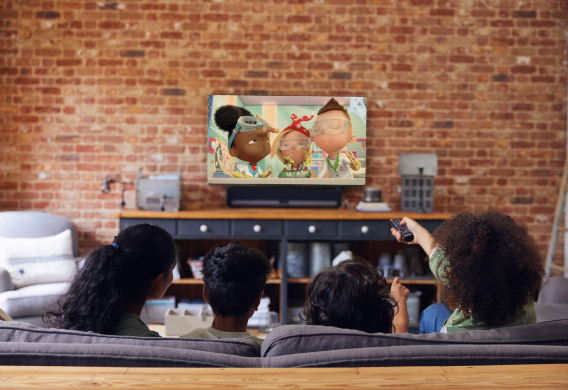
MBL: This is a very important concept. The model created by psychologist Urie Bronfenbrenner has a very interesting construction of the developmental ecosystem. There is a microsystem, of direct interactions of the child, such as with the family, or with the school, and there is another layer, which he calls the mesosystem, which is the connections between the school and the family. It’s no longer a direct, proximal relationship between the child and parents, or between the child and teachers, separately, but rather how the school must interact with the parents and vice versa to promote this development. However, this isn’t a given, it’s not a fixed process; it’s a construction that begins with awareness and includes investments in implementing parenting programs within the school environment. A former doctoral student, now a work partner, Elisa Altafim, and I have been working on a program to strengthen positive parenting and prevent violence, both in the family environment and in schools, and this is a topic we must pay close attention to. These are programs with scientific evidence that address child development. We work with group parenting programs, in eight sessions with the parents of children aged 0 to 8 years. Having these programs in the educational space is very important because it brings the family closer to the school and allows us to do educational work with the parents as well. Calling parent meetings shouldn’t just be about discussing problems. The school needs to have playful and leisure activities with families. Parents need to recognize the school as a community space that attracts them. Parenting programs work very well when they embrace this strategy of reflecting together with parents, without judging, discriminating, or blaming. These are universal prevention programs that help parents discuss and reflect on childcare and identify violence within the home. Initially, many parents say they don’t experience these situations, but sometimes television itself brings violence into the home. We work on an action program to educate children in safe environments, from the American Psychological Association, but it’s not exclusive to psychologists. It can be applied in health, social assistance, and education, and has already been implemented as public policy in some municipalities. We have done significant work in this area with children from schools in 24 municipalities in Ceará, and in Osasco, São Paulo. We are also starting in Barueri (SP) and in cities in Minas Gerais. These are programs with a multiplier effect. They help parents and teachers, who also have children. I strongly advocate for this model of combining parenting programs with education to break intergenerational cycles of violence. Many of these parents and caregivers have suffered violence, and their way of dealing with it is by repeating this cycle. This needs to be broken, hence the importance of this closer collaboration between school and family.
What is the impact of the practices that fathers and mothers use in the education and care of their children? Do men and women who did not have good regulation of their emotions and behaviors tend to repeat the same story as parents?
MBL: Parents deal with their children based on the history they have lived. They either repeat what they received, whether positive or negative, or they transform it. Many parents received a very rigid, authoritarian, and punitive education and reject doing that with their children. Sometimes, they do the complete opposite, which is also not good, and end up being permissive, letting the child do everything. Within parenting practices, there are different styles. There are very authoritarian, punitive, coercive parents who don’t have conversations, establishing a very strong power relationship. They can even be abusive, without much logic or induction, to make them understand why things happen. Within this profile, there may be yelling, hitting, pinching, humiliating. At the other extreme, there is the permissive, indulgent parent who lets everything go. It can even be affectionate, but it lacks rules and limits. And there’s the middle ground: parents who are authoritative, participatory, and democratic. There’s affection and there’s discipline; that’s what caring for a child is all about. It’s educational practice. Discipline is necessary; it’s like “the contour of the riverbank.” Extremes, however, are negative and don’t help the child develop. There are also absent parents who don’t participate, which is also negative. Often, parents arrive at parenting programs very disorganized in these styles. But that’s how they learned while growing up. Some even say, “Ah, but I was raised like that, I was beaten, and even so, I’m here.” Today, we know that this is violence, and it has consequences. We can’t take the risk. Just like in the past when we didn’t use seatbelts or sunscreen. Today we are much more aware of all this. Many studies show that people who suffered violence in childhood tend to repeat it. The risk of negative impact on the interaction between parents and children, on the child’s behavior, and on parenting practices is very high. That’s why it’s so beautiful when we invest in promoting development and universal prevention and see in parents that desire to change, without knowing how. The first step is awareness. No one changes behavior without identifying and being aware that they have something to change. The most difficult is for those who haven’t yet realized they need to change, but at some point, end up “infected.” We have just published a study with mothers with histories of severe, moderate, or no history of violence, and we work precisely with this program to educate children in safe environments. We observed a very positive effect on the parenting practices of all mothers, regardless of their history of adversity, with positive consequences for the child’s behavior. Even when there is an indicated risk, it is possible to reverse the process and change life trajectories. Let’s think of a child in a situation of poverty, food insecurity, who was born into adverse conditions, whether prematurely or to parents with a low level of education. When we act with protective factors, with a good school, combined with parenting and income transfer programs, also through public policy action, we can change the course of this story. We modified what is called the negative impact of risk. Without doing anything, this risk continues, intensely and chronically.
What evidence-based strategies are recommended so that this positive parenting can be incorporated into the care practices of each family, and more generally, into public policy initiatives?
MBL: The strategies must be based on a plan that effectively implements evidence-based policies. We cannot implement large-scale programs that do not have scientific evidence of effectiveness. The cost is too high. It is already known that when income transfer programs are combined with parenting programs, along with a quality school in a safe environment, a solid foundation is provided for child development. This model of implementation in public policies must be based on quality parameters. The first of these is awareness. Managers and professionals on one hand and beneficiaries on the other need to be sensitized and aware of the importance of these programs. The second component is a good organization of training and education with the fidelity of the professionals involved in the work. Furthermore, it is necessary to “nucleate,” that is, to form the working groups. Who will coordinate these programs? Who will supervise? Who will deliver, who will be on the front lines? Who will monitor? Monitoring is essential to know what worked, what didn’t, what the barriers were, and to learn from it. In the parenting program implemented by the Family Secretariat in Osasco in partnership with Education, for example, awareness was raised, and we provided high-quality and accurate training, using a protocol to ensure that what should be done was being done. Then, program delivery centers were formed in the municipality’s daycare centers, and a general coordinator was appointed to implement it. There is a science to implementation that effectively manages the quality parameters of interventions. And there is a final component: sustainability. This involves establishing guidelines for how this program will be maintained over time in institutions, whether at the municipal, state, or federal level. All this demands planning, flexibility, and adaptation in each region of the country, with its particularities and governance, and depends on political decisions to be sustainable. It is a large collaborative ecosystem involving researchers, specialists, teachers, and managers.
What is our level of maturity today in this regard as a country? How do you see the prospect of advancing these initiatives and the fundamental role of science in education in this process?
MBL: I am always optimistic and I think we have made progress. In the past, little was said about early childhood, and today the subject is on the agenda. Awareness has increased, including in the legislative and judicial spheres. But we still deal with some denialism from those on the front lines, in management. At the same time, those who do science in the country need to learn how to translate all this knowledge into practice, to arrive at a good outcome for the implementation of public policies. It is impossible to think about public policies without a basis in scientific evidence. We see the importance of this in health. In education, this also needs to be clear. Theory is very important, but it is necessary to generate data, interpret it, and use it for project implementations. When we think about early childhood education, commitment and collaborative partnership with the municipality are very important for a greater chance of success. There are, of course, federal and state guidelines, but municipal initiatives are essential in bringing families and schools closer together. We see how some cities become “infected” when they see good models in others. They want to do the same. We need to work to synchronize these partnerships. At the same time, we still need to address persistent deficits, such as the lack of childcare, especially considering impoverished environments and children whose caregivers need to work. Qualification, as I’ve already mentioned, with quality teacher training, combined with this increased availability and stimulation of development, offers a fundamental gain. It’s necessary to offer opportunities for continuing education and to value that. Teachers need to be valued in their careers. None of this is new. We already know this. We need to get things moving.