




Report given to Elisa Martins
Journalist, special for Yvirá
The right to education goes far beyond access: it requires permanence, learning, inclusion, appreciation of education professionals, and conditions so that no child has their trajectory interrupted by armed violence, racism, or inequalities.
This transformation began in 1998, with the creation of the Maré Pre-University Course, which has become a heritage of the territory. At that time, reaching university was a reality for very few residents. Today, more than 1,300 students have already entered higher education.
This work is linked to a permanent political advocacy agenda, which brings together monitoring of indicators, dialogue with public authorities and participation in spaces for formulation and social control.


Report given to Elisa Martins
Journalist, special for Yvirá
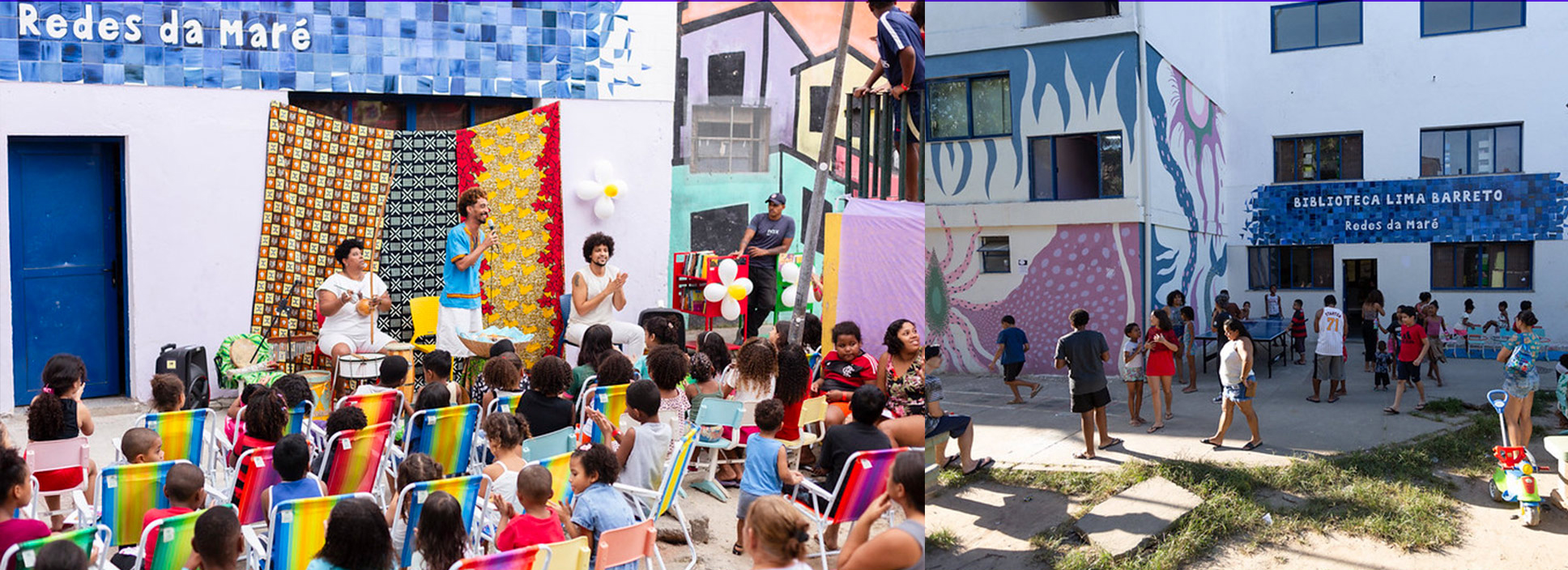
AUGUST/SEPTEMBER 2026 | n.º 8 | Diversity of initiatives that support children, adolescents, young people and adults offers opportunities to broaden horizons and transform trajectories PHOTOS: REPRODUCTION “REDES DA MARÉ”
When Andréia Martins arrived in the Maré favela complex in Rio de Janeiro in 2001 to work on an extracurricular activities project in the region’s schools, she didn’t imagine that this would be the beginning of a journey that would transform her life. It was there that the current director of Redes da Maré, a civil society organization that emerged from community mobilization in the 1980s, discovered the power of a territory capable of transforming education into an instrument of social transformation.
In an interview with YVIRÁ, Andréia recounts how different initiatives changed the local reality, expanding the right to education beyond access to school. Today, the 15 communities that make up the Maré neighborhood, home of more than 140,000 people, have 45 municipal and four state schools, a collective achievement that has allowed thousands of students to study closer to home and without their paths being interrupted by armed violence, racism, or inequality. Check it out below.
Andréia Martins
Director of Redes da Maré
Technician in Educational Affairs at UFRJ
PhD in Education (PUC-Rio)
The Maré I found in 2001 had only 22 public schools to serve thousands of children, adolescents, young people, and adults. The lack of vacancies was a reality, especially in Early Childhood Education and Adult Education. Guaranteeing the right to education meant, first and foremost, guaranteeing the existence of schools.
The changes didn’t happen by chance. In 2010, the Maré Que Queremos project brought together residents’ associations and Redes da Maré and transformed historical demands into concrete proposals for the public authorities, including the expansion of the public education network.
The mobilization yielded results. Today, Maré has 45 municipal schools and four state schools, a collective achievement that allowed thousands of students to study closer to home and reaffirmed that social participation produces real change.
However, we have learned that the right to education goes far beyond access: it requires permanence, learning, inclusion, appreciation of education professionals, and conditions so that no child has his/her trajectory interrupted by armed violence, racism, or inequalities.
The right to education goes far beyond access: it requires permanence, learning, inclusion, appreciation of education professionals, and conditions so that no child has their trajectory interrupted by armed violence, racism, or inequalities.
The Charter that was born from the voice of Maré
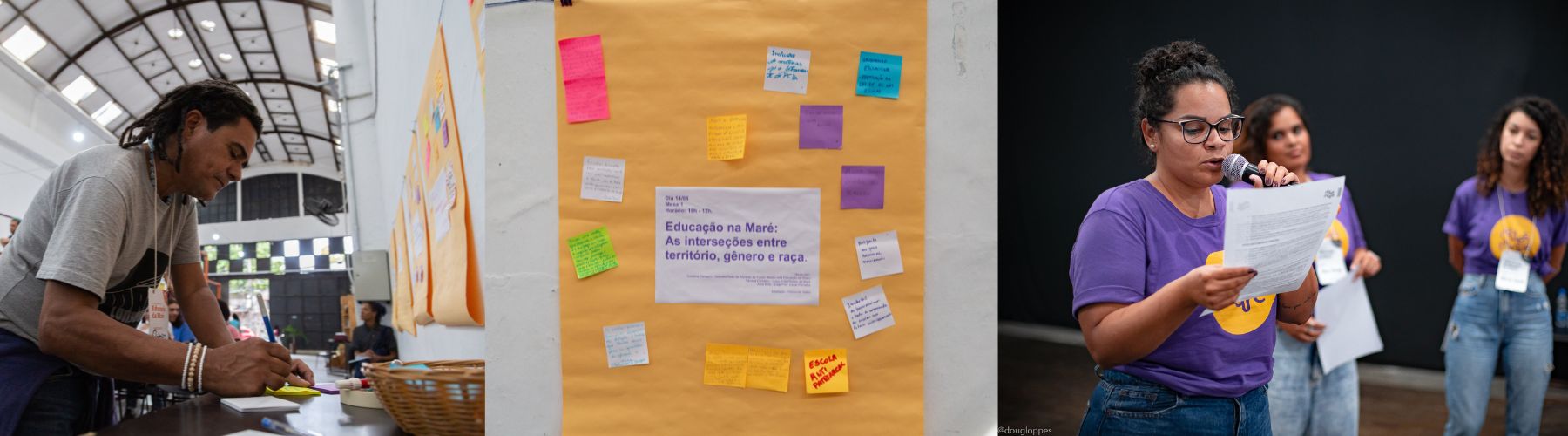
Perhaps no moment better represents this journey than the creation of the Charter for Education in Maré, on June 15, 2023, during the 4th Maré Education Seminar: Dialogues and possibilities for guaranteeing the right to education.
The Charter was born from the dialogue between teachers, students, families, managers, researchers, and residents. More than a document, it expresses the collective commitment to an inclusive, anti-racist, democratic, and welcoming public education for the 49 public schools in Maré.
When I look at this trajectory, I see that education remains one of the pillars of Redes da Maré’s work to guarantee rights in a territory where about 140,000 people live. Despite progress, one challenge remains evident: Data from the 2024 School Census indicates that Maré has more than 41,000 children and adolescents aged 0 to 17, but only about 20,000 students are enrolled in local public schools. This data shows that expanding access to quality education continues to be one of our main struggles.
Throughout this journey, I have had the privilege of witnessing stories that give meaning to everything that has been built collectively. I have seen young people transform what once seemed like an unattainable dream into reality, as they crossed the gates of excellent public universities. I have seen students gain places in leading schools and entire families return to studying. I have seen women become literate as adults or elderly.
This transformation began in 1998, with the creation of the Maré Pre-University Course, which has become a heritage of the territory. At that time, reaching university was a reality for very few residents. Today, more than 1,300 students have already entered higher education. In 2025, we celebrated 40 acceptances, 37 of which were to public universities. The Preparatory Course for High School has also contributed to the acceptance of 467 students, 333 of whom were admitted to excellent public schools.
This transformation began in 1998, with the creation of the Maré Pre-University Course, which has become a heritage of the territory. At that time, reaching university was a reality for very few residents. Today, more than 1,300 students have already entered higher education.
The future we continue to build
The achievement of each of these people inspires and challenges us to go further, expanding our understanding of the role that a civil society institution can play in defending the right to education. We realized that the experience accumulated in the territory also needed to produce knowledge capable of qualifying public debate and strengthening political advocacy. Redes da Maré’s Political Incidence is a strategic front that articulates actions to promote concrete transformations in the way public policies are designed, implemented and monitored in the 15 favelas of Maré.
This is how research and publications, such as Public education in the Maré favela complex: challenges and potentialities and Analysis: The Right to Education in Maré began to transform the reality experienced in Maré schools into evidence, recording not only inequalities, but also the experiences, resistance and solutions collectively constructed by the community. This work is linked to a permanent political advocacy agenda, which brings together monitoring of indicators, dialogue with public authorities and participation in spaces for formulation and social control.
This work is linked to a permanent political advocacy agenda, which brings together monitoring of indicators, dialogue with public authorities and participation in spaces for formulation and social control.
Among the main challenges that we continue to report is the impact of armed violence on the right to education. Data from the 9th edition of the Public Security Bulletin in Maré shows that, between 2016 and 2025, schools stopped operating for around 163 days as a result of police operations.
This evidence strengthened our efforts to guarantee 200 school days and contributed to the approval of CNE/CEB Opinion No. 3/2026 by the Brazilian Ministry of Education, formalized by the publication of CNE/CEB Resolution No. 3/2026, which establishes National Guidelines to guarantee 200 school days in crisis contexts, including situations of armed violence. More than celebrating this progress, we remain committed to monitoring its implementation so that the guidelines translate into effective protection of the right to education in favelas and peripheral areas.
It is from this understanding that the Vamos pra Escola campaign was born, which in 2026 reached its 5th edition. It mobilizes residents to guarantee access to enrollment and reaffirms that education is a collective right.
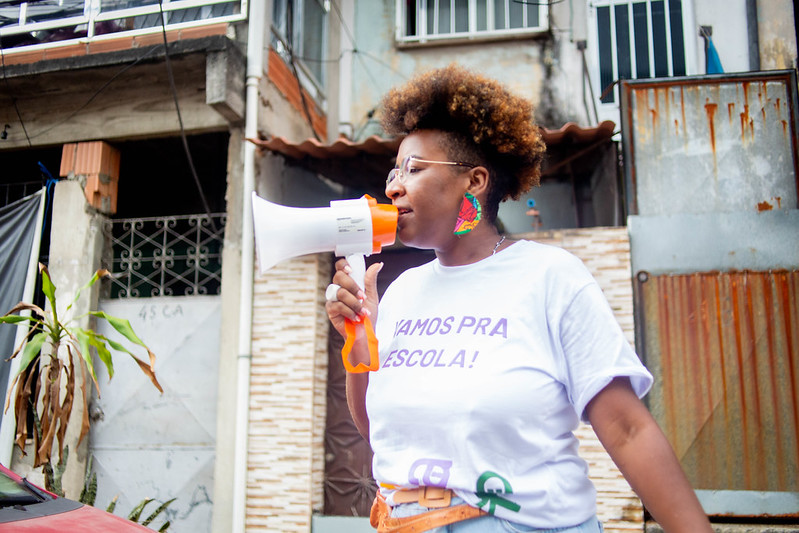
Today we continue to develop initiatives in the Education Axis that accompany children, adolescents, young people and adults in different school trajectories, reaffirming that guaranteeing the right to education requires a permanent presence in the territory. Along this journey, thousands of people found in education the opportunity to broaden their horizons and transform their trajectories.
May the rights of residents of favelas and outskirts be guaranteed and expanded!