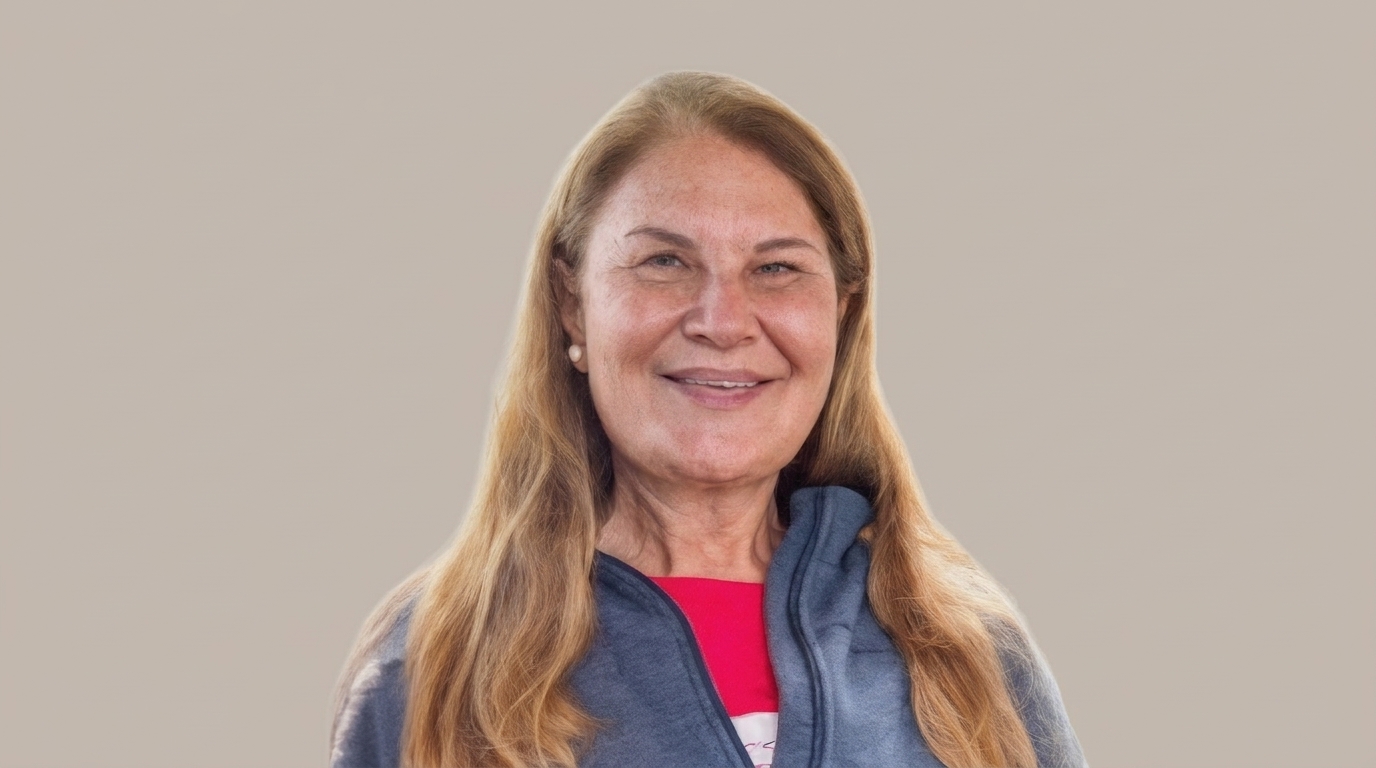
Como educadora, percebi que o tempo na educação 60+ tem outra cadência. Entretanto, nem tudo são flores. Existe o preconceito estrutural, o etarismo, que muitas vezes vem de dentro da própria família.
In this age group, the learning process is intrinsically linked to affection. If the environment is not welcoming, if there is no space for error without judgment, the cognitive barrier becomes insurmountable. Brain plasticity is still there — science has already proven that the aging brain is capable of activating new connections — but the engine that drives this change is emotional motivation.
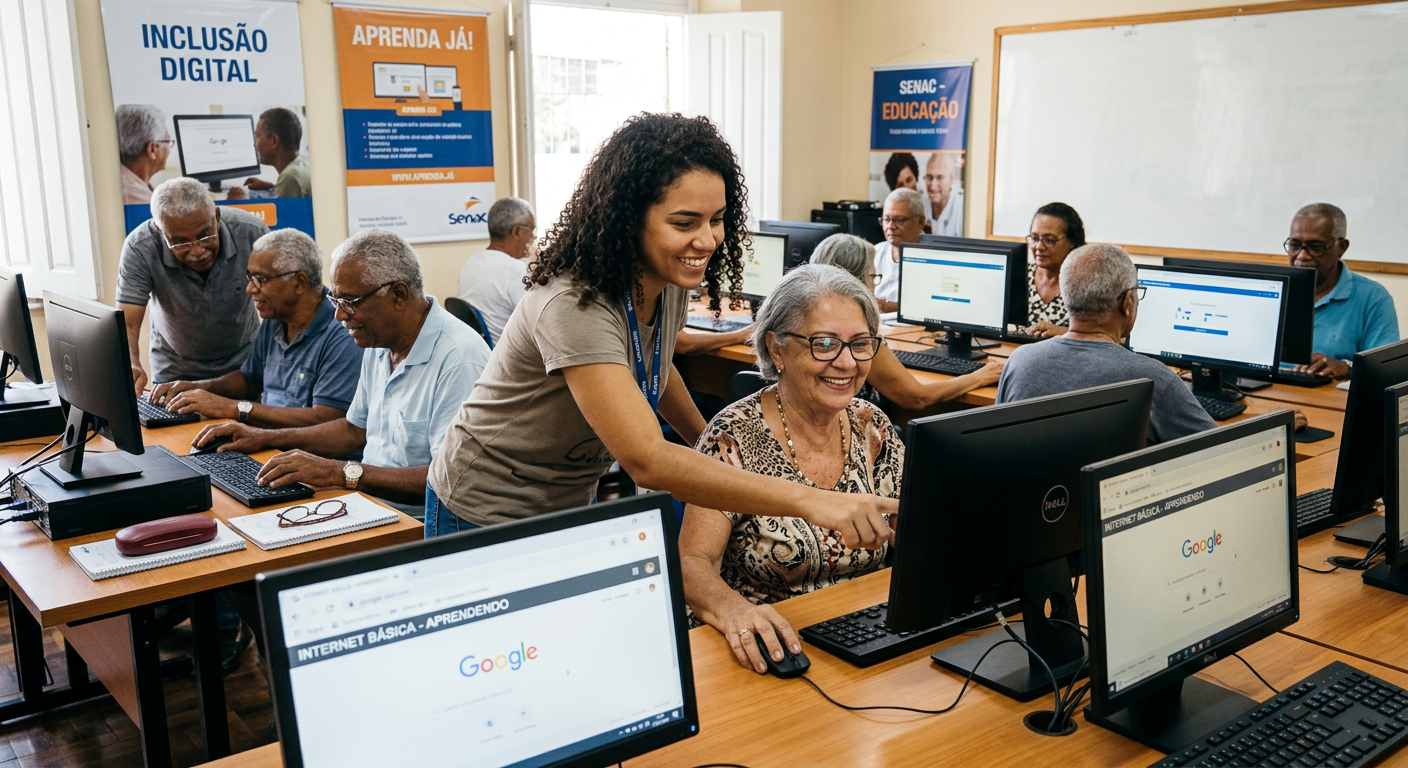
When another student, Hélio, 70 years old, managed to send his first email to the computer science teacher, I saw the exact moment when learning transformed into empowerment. He was not just “using the computer”. He was reclaiming the right to belong to the present and expressed the following phrase: “Now I’m in the world just like you! Everything will come to me too.” And he clapped, smiling happily like a boy who had received his long-awaited gift.
As an educator, I realized that time in education for the 60+ age group has a different cadence. There is no rush to meet rigid curricular goals, but there is a silent urgency to give meaning to what is learned. Each concept needs to be anchored in reality. If we are talking about literature, we are not only discussing the structure of the text, but how that story resonates with their memories of their youth. If we are talking about citizenship, we are discussing the rights they have painstakingly won.
Cognitive challenges are real. Short-term memory may fluctuate and information processing may be slower, but the ability to synthesize and the critical thinking of older people are phenomenal. They possess what we call crystallized intelligence — the ability to use knowledge acquired throughout life to solve problems.
In my classes, I encourage them to tell how they survived economic crises or how they organized themselves in a community without the internet. The classroom becomes a living history laboratory, and the class, heterogeneous in age, is enchanted by the stories of society, culture, and the social interrelations that are being built.
However, it is not all roses. There is structural prejudice, ageism, which often comes from within the family itself. “Why do you want to study this now, at this stage of your life?” is a phrase many hear. This social stigma generates dangerous self-sabotage. My mission, therefore, transcends teaching content: I work on rebuilding self-esteem.
Educating for longevity is about convincing the individual that the act of learning only ends with their last breath. Retirement may be from the job market, but never from curiosity.
The feedback I receive is disproportionate to what I offer. The gratitude of students over 60 is profound and loyal. They value every minute, the attentive gaze, and the patience. I have learned from these people that education in old age is a form of resistance against social isolation. The school is a meeting point, a club, a refuge, and a new beginning.
At the end of each semester, I look at my class and see faces that were once tired and now shine with the satisfaction of discovery. I see people who have relearned to read in order to tell stories to their great-grandchildren, men who have learned to cook after widowhood, and women who have discovered feminism at age 80.
My experience as an educator in this group has transformed my view of aging itself. Today, I do not see old age as a decline, but as a phase of harvest and new sowing.
Educating the 60+ audience has taught me that knowledge is the only asset that, the more you share it, the more you possess. And that it is never, under any circumstances, too late to be who you have not yet had time to be. Learning in maturity is not about accumulating diplomas, but about keeping the flame of autonomy and the glow of belonging alive.”
 DIVERSE EXPERIENCES, STRAIGHT FROM THE CLASSROOMS