Guilherme Brockington D’Or Institute for Research and Education Member of the CpE Network
The documentary shows how this space fosters the resurgence of a healthy and forgotten childhood, increasingly crushed by screens and social media. There, in that circle, the game is different, and beautiful.
More than just academic reinforcement, we see there a space of acceptance, healthy coexistence, learning, and healing.
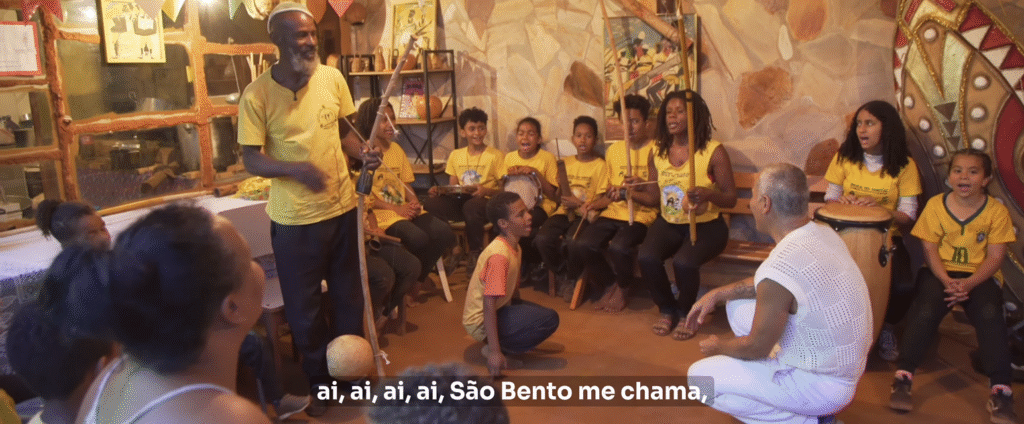
The stars of the documentary are indeed the children and these incredible women, but the participation of Mestre João and the capoeira/neuroscientist Sidarta Ribeiro is the Medium, who accompany and fill the sound of the Gunga, which commands the rhythm and the capoeira roda (circle).
Guilherme Brockington D’Or Institute for Research and Education Member of the CpE Network
FEBRUARY/MARCH 2026 | n°.5 | CpE Network documentary delves into the powerful dialogue between scientific perspective and pedagogical practice with the Backyard School
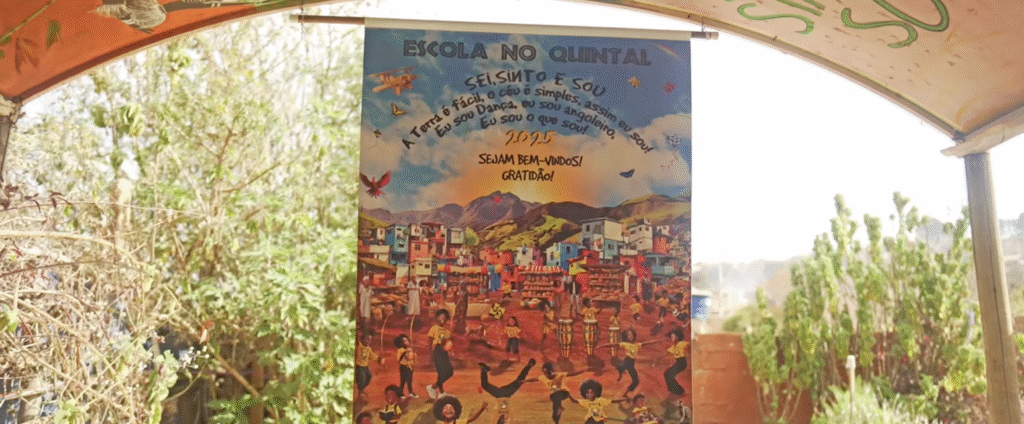
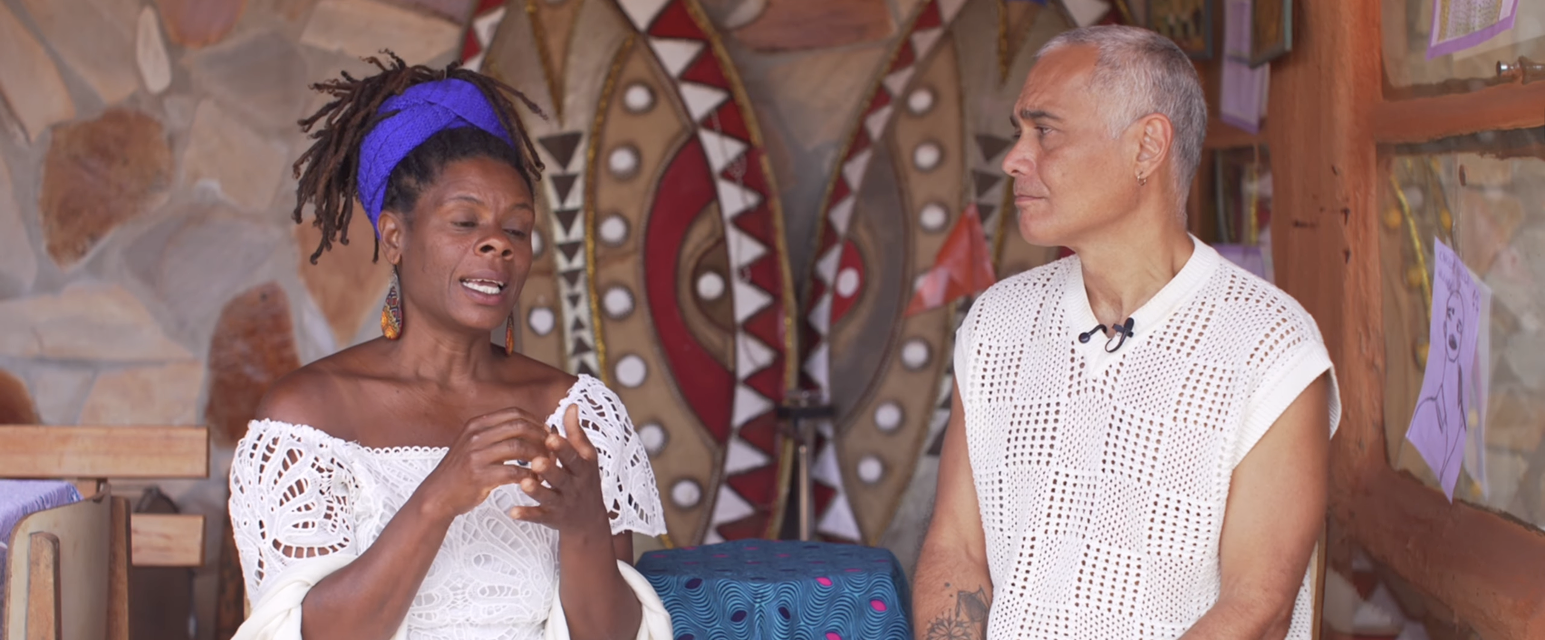
IMAGES EXTRACTED FROM THE DOCUMENTARY “NA PRÁTICA: INTERFACE ENTRE CIÊNCIA E EDUCAÇÃO”
“A capoeira practitioner who is skilled slips, but descends without falling,” as the beautiful capoeira Angola song says, summarizes the spirit of the documentary “In Practice: Interface Between Science and Education,” recently released by the National Network of Science for Education (CpE Network). Professor Flávia Soares, escaping the fall of a violent husband, becomes the Warrior Queen who conceived and coordinates the “Escola no Quintal” (Backyard School), a sensational project that fills us with joy, love, and faith in life. The idea arose precisely after the setback we experienced with the emergence of the COVID-19 pandemic, a difficult and painful moment for everyone, even more so for the poor children from low-income families in this otherwise rich country.
Flávia, in touch with her Sacred self, acts to resolve, in some way, what the public authorities ignore, and creates a welcoming space for these children who were, at that moment, deprived of schools and suffering the daily tragedies aggravated by the virus. Thus, in Pedreira Prado Lopes, a favela in greater Belo Horizonte, the “Escola no Quintal” was born. The documentary shows how this space fosters the resurgence of a healthy and forgotten childhood, increasingly crushed by screens and social media. There, in that circle, the game is different, and beautiful.
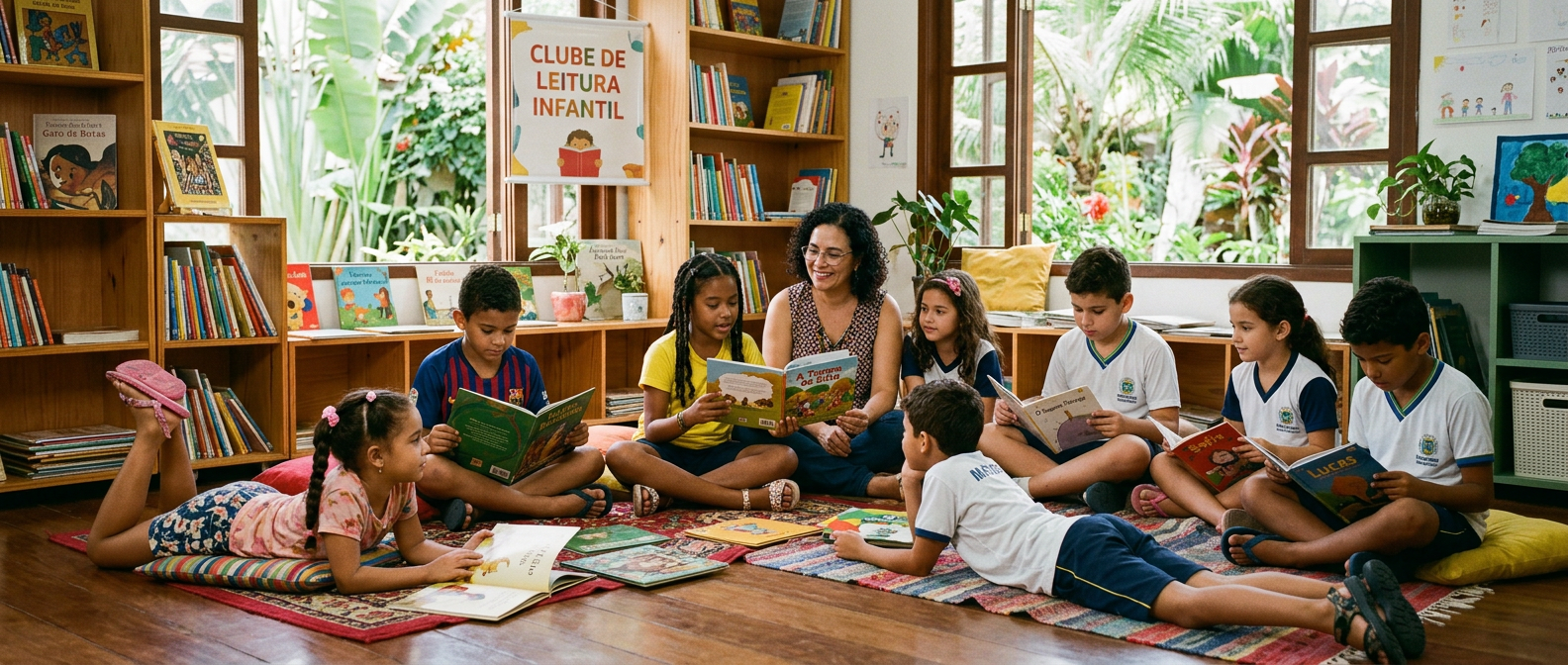
Cell phones are not prohibited, but naturally they lose their importance because they cannot compete with the shuttlecock, the ball, the top… the scrolling of the screen is easily defeated by flying kites, kneading bread, and stepping in the mud. It’s about children being able to play again, freely, creatively, and joyfully.
Today, there is a wealth of research in psychology and neuroscience that reveals the positive (and essential) impacts of play on human development. And here, in this circle, mothers also play. It’s touching to hear Aline, a mother at 16, recount a childhood interrupted by pregnancy and partially recovered in this space, where she could play again, something she had forgotten. Play thus reveals its transformative potential.
The documentary shows how this space fosters the resurgence of a healthy and forgotten childhood, increasingly crushed by screens and social media. There, in that circle, the game is different, and beautiful.
Literacy Without Pain
Anchored in what Flávia calls “literacy without pain,” the pedagogy presented in the documentary shows how valuing childhood culture, acceptance, the body in movement, dance, and Afro-Amerindian roots produces profound impacts on children and adults involved in the project.
Born to prevent the gains in development from dissipating during the pandemic, “Escola no Quintal” has done and continues to do much more: children and mothers have returned to writing and taking pride in their own names. More than just academic reinforcement, we see there a space of acceptance, healthy coexistence, learning, and healing.
Rescuing traditional knowledge, games from grandparents, and spells forgotten by time, Flávia, along with several dedicated teachers, builds and rescues the self-esteem and potential of children made invisible by the system that drives this country. Thus, we can watch a young girl saying that she dreams of being a doctor, a cheerful group of kids showing off various medals in mathematics, chess, and behavior olympiads… in other words, real people dodging life’s blows and already stepping up to the game.
More than just academic reinforcement, we see there a space of acceptance, healthy coexistence, learning, and healing.
Children and mothers, the stars
The most touching aspect of the documentary is getting to know the mothers. Ivanilde, Liliam, Valdirene, Juliana, Silvana, and Aline, women like millions who exist in this country, made invisible by a racist and misogynistic society, finding in the “Escola no Quintal” a space of recognition, acceptance, and care. All of them, without exception, show their concern for their children and gratitude for what they share there. And, more than that, their voices are heard.
The stars of the documentary are indeed the children and these incredible women, but the participation of Mestre João and the capoeira/neuroscientist Sidarta Ribeiro is the Medium, who accompany and fill the sound of the Gunga, which commands the rhythm and the capoeira roda (circle). It’s a short documentary, about 50 minutes long, that shows it’s possible to create better, more welcoming, more beautiful worlds that allow children to develop fully, joyfully, happily, and powerfully.
In an increasingly aggressive and sick world, it doesn’t surprise me that capoeira emerges as a way out. From the effort to preserve the culture of its people, an art form arose that is simultaneously struggle, resistance, and beauty, just like “Escola no Quintal”. Once again, it’s worth watching the documentary: the link is here.
The stars of the documentary are indeed the children and these incredible women, but the participation of Mestre João and the capoeira/neuroscientist Sidarta Ribeiro is the Medium, who accompany and fill the sound of the Gunga, which commands the rhythm and the capoeira roda (circle).
 BOOK, SERIES, MOVIE REVIEWS