





Reports given to Elisa Martins e Fernando Louzada
Rede CpE
The phenomenon shown by the data is the growth of higher education among the poorest segment of the population, who need to work during the day.
Prohibiting distance education is like what happened with cell phones in basic education, which were formally banned in Brazil. We return here to the issue of engagement.
The personalization provided by technologies associated with distance education is, today, a powerful tool for those who want to learn autonomously.
Much controversy has arisen in recent years regarding the efficiency of the expansion of distance education without clear and, in a way, restrictive regulation.
One of the relevant characteristics of distance learning is the possibility of graduating a much larger number of people, but this seems to contrast with the quality of the training.


Reports given to Elisa Martins and Fernando Louzada
CpE Network
FEBRUARY/MARCH 2026 | nº5 | Record number of students in distance learning undergraduate programs compared to in-person programs reinforces the debate about the advancement of this modality in the country
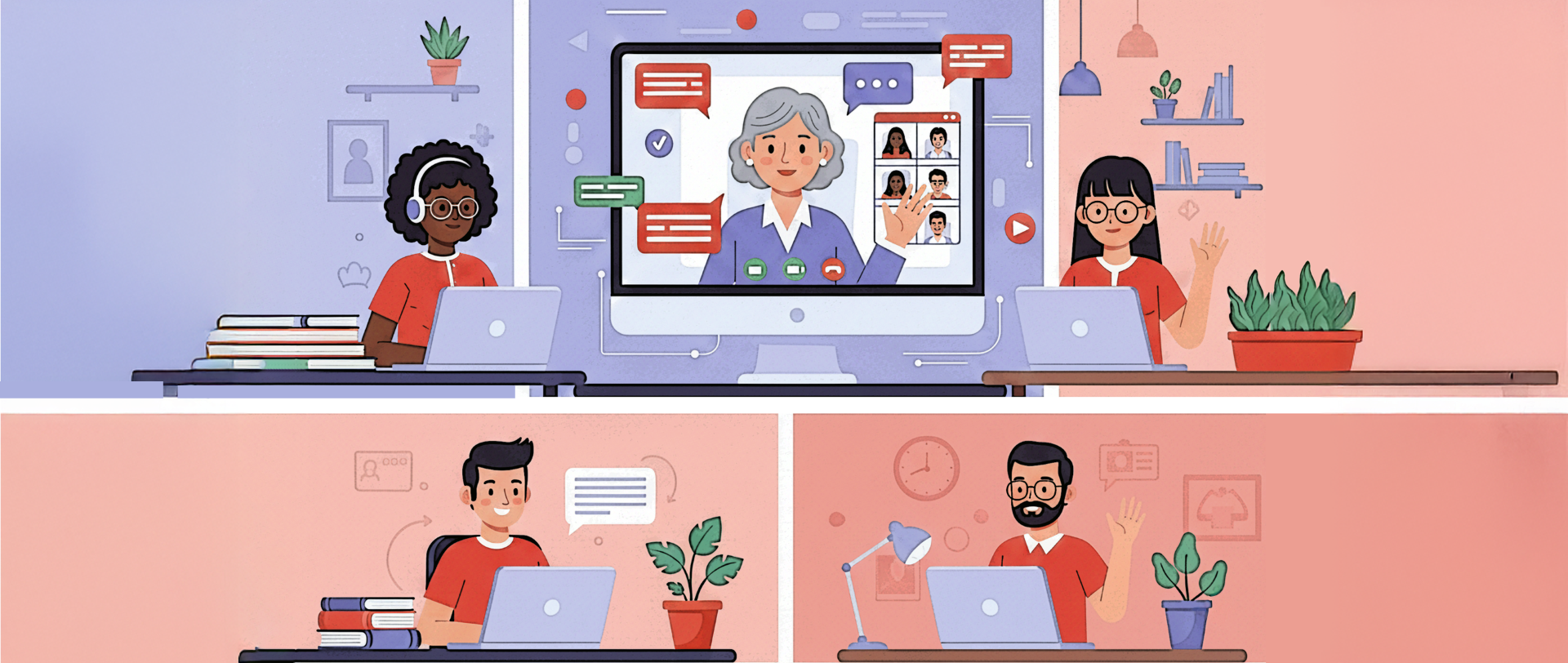
ILLUSTRATION: C. BORGES
Enrollments in distance learning courses in Higher Education surpassed in-person enrollments for the first time in Brazil, according to the Higher Education Census released in the second half of 2025 by the National Institute of Educational Studies and Research Anísio Teixeira (Inep). The news intensified the debate comparing the two models. After all, does Distance Education have the same quality as in-person education? What are the effects of this expansion on the training of undergraduate students in different courses?
YVIRÁ brought together two distinct views on the subject. In the first, digital scientist Maurício Garcia, from the Institute of Technology and Leadership, emphasizes that distance learning activities are, above all, pedagogical resources. Based on Census data, he states, the distance learning modality in the evening is growing as an opportunity for greater access to higher education for the segment of the population that needs to work during the day. Researcher Marco Randi, from the Federal University of Paraná, discusses differences in the quality of training and points out that distance learning can also be a stressful factor for faculty. Furthermore, he says, remote learning has not yet solved one of the main problems we face in our country: social inequality. Check it out below.
Maurício Garcia
Institute of Technology and Leadership
Brazil reached 10 million enrollments in higher education, according to data from the 2024 Higher Education Census, 3% more than the previous year, in a linear and constant growth since the 1990s, despite different presidential mandates. But what drew the most attention to the release of the research was the fact that more than half of the enrollments are in distance education courses. This is the first time that distance education has surpassed the mark of in-person education. This was a trend that had been occurring since 2015, the year in which enrollments in in-person courses peaked in Brazil. Since then, these enrollments have only been declining.
There were many comments about this predominance, mostly negative, expressing concern about the quality of these courses, as well as the precariousness of in-person courses. It is worth analyzing, however, these same data from another perspective. When broken down by shift, it’s noticeable that enrollments in daytime in-person courses remain stable at just over 2 million, practically the same amount for the past 14 years. On the other hand, when enrollments in evening in-person courses are added to those in distance learning courses, the growth is evident and practically linear, without major changes over the last 30 years. In other words, this segment has been growing consistently for a long time.
This segment (Distance Learning + Evening) brings together students from similar socioeconomic backgrounds. They are usually working adults, people who cannot attend daytime in-person courses because they need to generate income. In other words, the phenomenon shown by the data is the growth of higher education among the poorest segment of the population, who need to work during the day. What is happening is a migration of students from evening in-person courses to distance learning, either for the convenience of avoiding commutes or because of the tuition fees, which are usually lower than those of in-person courses.
Furthermore, distance learning courses are also absorbing former high school graduates, people who had stopped studying. The combination of these two aspects (night classes and former graduates) justifies the growth in enrollments in distance learning courses.
It is clear, therefore, that the growth of distance education is not at the expense of in-person learning. Thus, there is an important funding issue behind this phenomenon. It is impossible to discuss the modality of delivery (in-person versus distance) without including this funding issue. Probably, if distance learning students had tuition waivers and scholarships, many would study in person during the day, as they would not need to work.
The growth of distance education is, above all, a symptom of a fundamental problem: the absence of public policies to guarantee access to and retention in higher education. Thus, instead of discussing public policies for inclusion in higher education, to increase such important aspects as civic and critical engagement in society, strengthening the workforce, and Brazil’s international competitiveness, the focus of discussions on distance education is centered solely on how to limit or block it.
Distance learning activities are, first and foremost, pedagogical resources and should be considered as such. For example, stating that it’s impossible to learn medicine remotely is a shallow generalization. It’s evident that, in theory, it’s possible to learn subjects like histology, physiology, and even pathology remotely. But it’s also evident that skills like inspection, palpation, percussion, and auscultation, fundamental for a good clinician, cannot be developed remotely.
The same reasoning can be applied to other courses. In Law, for example, it’s possible to learn the legal system remotely, but hermeneutics and rhetoric demand in-person learning. You don’t need much experience in education to realize that, within the same course, there are things that can be learned remotely and others that cannot.
In my opinion, the only consistent argument against distance learning, in terms of quality, is student engagement. People engage more and interact more in face-to-face activities. Although remote conferences remain numerous, convention centers are still packed with in-person events, with people interacting not only during lectures but mainly during coffee breaks, at booths, and in hallways. A similar discussion is taking place in the context of remote versus in-person work, with many companies limiting or even abolishing remote work.
So, if that’s the only consistent argument against distance learning, it wouldn’t make sense to prohibit it in certain courses and allow it in others. Furthermore, Brazil has had a system for evaluating the quality of higher education for decades. If this system is failing to assess the quality of distance education, it is certainly failing to assess face-to-face education as well. We shouldn’t discuss the quality of distance learning without questioning the system as a whole.
Prohibiting distance education is like what happened with cell phones in basic education, which were formally banned in Brazil. We return here to the issue of engagement. Letting children use cell phones during class is the same as having two large screens next to the teacher showing a different, much more engaging program. It’s impossible to compete. But, in this case, the solution is simply a matter of technology. The day they invent a device capable of blocking 5G in the classroom, this problem will be solved, since the institution will be able to control access through the internal Wi-Fi network, leaving the teacher to release only the resources that make sense for their activities.
In other words, banning cell phones in basic education is like using a cannon, given the technical impossibility of using sniper fire. Banning distance learning is similar. If quality cannot be guaranteed, then it would be better to ban everything.
My bet is that, in the future, both bans will be reviewed. When more modern assessment systems and “sniper technologies” become practically viable, there will certainly be a relaxation of these rules to allow for the best use of technology in favor of inclusive and quality education.
Marco Randi
Center for Entrance Examinations
Federal University of Paraná
Distance education is not new in Brazil. I remember, as a child, seeing the wide range of courses offered by the Instituto Universal Brasileiro (founded in 1941) in the middle or on the back cover of the comic books I read. It was the 1970s. I even bought one of these courses, in electrotechnics, which came in installments and electronics kits. I didn’t finish it.
At the beginning of the 20th century, there were already typing courses by correspondence advertised in the Jornal do Brasil. In this first phase, printed material dominated distance education. In the 1920s, radio broadcasting enabled some expansion of the distance education system until, from the 1960s onwards, mainly with the arrival of audiovisual media such as broadcast television, a new leap occurred. A good example of distance education initiatives in this medium is Telecurso, created by the Roberto Marinho Foundation, which has existed since 1977.
Starting in the 1990s, new technologies added new possibilities, especially with the arrival of the internet. A compelling statement about these alternatives was made by Isaac Asimov, an American writer and biochemist, in 1988, in an interview with Bill Moyers. On that occasion, he stated that what was to come would revolutionize learning, which would no longer happen in the same way, at the same time, in the same place (the school), for all people.
The personalization provided by technologies associated with distance education is, today, a powerful tool for those who want to learn autonomously. Being able to choose the time to study (asynchronous education) and the location, using mobile devices with internet access and ease of access, has given distance education an unprecedented way to obtain professional certification.
The 1988 Federal Constitution, for the first time in Brazil, defined primary education as a “subjective public right” (Article 208, § 11), guaranteeing access to primary education for all people. Almost a decade later, the Law of Guidelines and Bases of Education (LDB) definitively recognized distance education as a modality of training in education.
One cannot speak of education without considering teachers to fulfill this guaranteed right, especially teachers with adequate training. And there lies a difficult problem to solve.
The State’s encouragement of education for all led to the necessary expansion of higher education, including distance learning, in teacher training. This period was also characterized by the consolidation of neoliberalism and its discourse on the minimal state, and the emancipation of civil society (generally confused with the “market”) from the State. The expansion of private education was, therefore, an almost “natural” consequence.
Between 1990 and 1999, the number of places in public higher education grew by 60%, compared to a growth of 180% in private institutions, despite the demand for these places not increasing at the same rate, with public institutions surpassing private ones. The main investment of private institutions was concentrated in undergraduate courses, and this expansion continued throughout the 21st century.
According to the 2024 Higher Education Census, Brazil had 10 million students in higher education, with 50.7% in distance learning. While distance learning grew by 5.6%, face-to-face education shrank by 0.5% (Inep, 2025), which reinforces the importance of addressing this issue.
In 2017, Decree 9,057 was published, regulating article 80 of the LDB (Brazilian Education Law), which deals with distance education. This decree was viewed very favorably by the private sector, as it regulated the area in a very generic way, allowing the creation of courses without the minimum necessary conditions. It was no coincidence that, in 2025, a new decree was published, revoking the previous one: Decree 12,456.
Much controversy has arisen in recent years regarding the efficiency of the expansion of distance education without clear and, in a way, restrictive regulation. In a 2018 study, for example, Professor Carlos E. Bielschowsky presented the worrying contrast regarding the difference in performance, in the ENADE (National Student Performance Examination), between students of the same undergraduate courses, both in-person and distance learning, from the same institutions. The ENADE is the National Student Performance Examination, a test taken by graduating or recently graduated higher education students and which is part of the evaluation system for Brazilian undergraduate courses.
In this 2018 study, for the five largest private higher education institutions in terms of distance learning enrollment (58% of enrollments), the performance of students in the ENADE in the distance learning modality was worse than that of those who took the same course in the face-to-face modality. This was not observed, on average, for public institutions and for smaller private institutions, in which the performance was similar for distance learning and face-to-face students. Based on the results, it can be stated that mass distance learning (large number of enrollments) leads to worse results than face-to-face training.
One of the relevant characteristics of distance learning is the possibility of graduating a much larger number of people, but this seems to contrast with the quality of the training. This is a cause for concern that led to the publication of new regulations on the subject by the State, including prohibiting distance learning for some courses.
Beyond the quality of those who graduate in this modality, distance learning can also be a stressful factor for the teaching staff. Researcher Andressa A. Araújo and colleagues from the State University of Ceará showed that younger teachers (in age or duration of service) perceive their work as more stressful and less enjoyable in the field of distance education. The expansion of private higher education institutions has led to changes in teacher work relationships, resulting in increased stress and decreased job satisfaction. The social distancing brought about by remote work, typical of distance education, is identified as a relevant factor in generating stress, especially among younger people.
Distance education is a training modality that, despite being well-established in Brazil, still needs to be evaluated and improved to ensure not only the quality of the professional training it provides, but also to seek solutions for inequality of access. During the COVID-19 pandemic, 30% of Brazilian households did not have internet access. In families whose income was up to one minimum wage, this number rose to 50%. Despite helping to democratize access to education, distance learning has not yet solved one of the main problems we face in our country: social inequality.